Standing desks create new back pain problems for Cedar Falls office workers who transition too quickly or use improper posture while standing, replacing sitting-related issues with standing-related strain on the lower back, hips, and feet. Gonstead chiropractic care addresses both the existing spinal misalignments from years of poor sitting posture and the new dysfunctions created by incorrect standing desk use while teaching proper ergonomics for successful transition. Standing isn’t automatically better than sitting if you’re doing it wrong.
Why Standing Desks Became Popular
The standing desk trend emerged from valid concerns about prolonged sitting. Research shows extended sitting increases health risks beyond just back pain.
Sitting all day associates with higher rates of cardiovascular disease, diabetes, obesity, and even certain cancers. “Sitting is the new smoking” became a popular phrase.
Standing desks seemed like the obvious solution. If sitting is bad, stand instead.
But the reality is more complex. Standing all day creates its own set of problems. The solution isn’t replacing one extreme with another.
New Problems Standing Desks Create
Cedar Falls office workers who enthusiastically switched to standing desks often discover new pains replacing old ones.
Lower Back Strain
Standing in one position for hours creates static loading on your lumbar spine. Without movement, muscles fatigue and joints compress.
Many people compensate by hyperextending their lower back (swayback), which increases disc pressure and facet joint stress.
Hip and Knee Pain
Standing workers often shift weight repeatedly to one leg. This creates uneven loading on hips and knees.
The static standing position stresses joints differently than walking does. You’re not getting the benefits of movement even though you’re standing.
Foot and Ankle Problems
Hours of standing on hard floors without proper footwear creates plantar fasciitis, Achilles tendinitis, and general foot pain.
Varicose Veins
Prolonged standing reduces circulation in legs and can contribute to or worsen varicose veins.
Fatigue
Standing requires more energy than sitting. Many standing desk users report increased overall fatigue, particularly in the first weeks.
The Wrong Way to Use a Standing Desk
Most problems come from how people use standing desks, not the desks themselves.
Going All-In Immediately
Switching from 8 hours of sitting to 8 hours of standing overnight is a recipe for pain. Your body needs gradual adaptation.
Standing in One Position
Static standing is just as problematic as static sitting. Movement is what your body needs, not a different static position.
Poor Posture While Standing
Slouching, leaning on one leg, or hyperextending your back while standing creates new dysfunctions.
Wrong Desk Height
Standing desks set too high force shoulder elevation and neck strain. Too low creates forward bending.
Ignoring Footwear
Standing in dress shoes with poor support or high heels creates foot, knee, and back problems.
The Right Way to Transition to Standing
Successful standing desk use requires gradual adaptation and proper technique.
Start with 20-30 Minutes
Begin standing for just 20-30 minutes once or twice daily. Sit the rest of the time.
After a week at this level, increase by another 15-30 minutes. Build gradually over weeks and months, not days.
Alternate Throughout the Day
The ideal pattern is sitting for 30-45 minutes, then standing for 15-30 minutes, repeated throughout the day.
This variation provides the health benefits of reduced sitting without the problems of prolonged standing.
Move While Standing
Shift weight between feet. Do calf raises. March in place briefly. Take walking breaks.
The goal is movement variation, not just a different static position.
Proper Standing Posture
Weight evenly distributed on both feet. Knees slightly soft, not locked. Neutral spine, not swayback. Shoulders relaxed, not elevated.
Your ears should align over your shoulders, which align over your hips, which align over your ankles.
How Existing Spinal Problems Affect Standing
If you already have spinal dysfunction from years of poor sitting posture, standing desks can worsen existing problems.
Forward head posture from sitting doesn’t magically correct when you stand. You’re now standing with forward head posture, which is just as problematic.
Lower back misalignments from sitting create uneven weight distribution when standing. This accelerates problems.
Pelvic dysfunction affects standing mechanics. If one hip is higher or rotated forward, standing loads your spine unevenly.
This is why many Cedar Falls office workers need chiropractic care before or during their standing desk transition. Correcting existing problems allows proper standing mechanics.
Desk and Monitor Setup for Standing
Proper ergonomics matter as much standing as sitting.
Desk Height
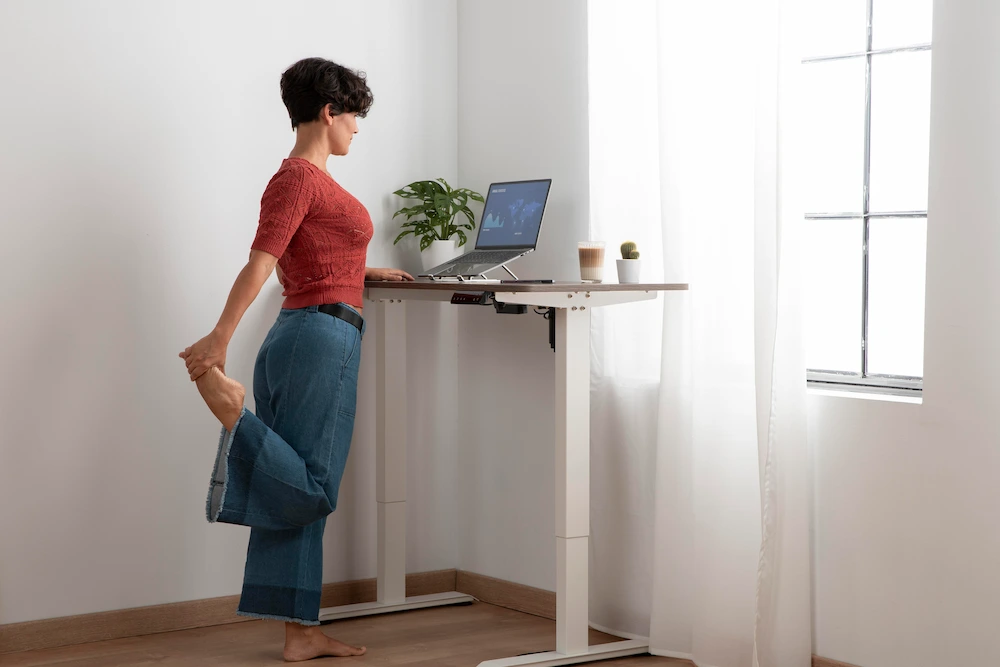
Your elbows should bend at roughly 90 degrees when hands are on keyboard. This typically means desk surface at elbow height.
Adjustable desks allow fine-tuning. Fixed-height standing desks only work if they happen to match your body dimensions perfectly.
Monitor Position
Top of screen at or slightly below eye level. Monitor arm’s length away. Directly in front, not requiring neck rotation.
This is identical to sitting ergonomics. The principles don’t change just because you’re standing.
Keyboard and Mouse
Keep these close to your body. Reaching forward creates shoulder and neck strain.
Consider a keyboard tray that angles slightly downward. This promotes more neutral wrist position.
The Anti-Fatigue Mat Question
Anti-fatigue mats are foam or gel mats you stand on at your desk. Do they help?
Research suggests they provide some benefit by encouraging subtle movements and reducing pressure on feet.
However, they’re not magic. A mat won’t fix poor posture or make standing all day healthy.
If you use one, choose a mat with moderate firmness. Very soft mats can create instability. Very firm mats don’t provide much cushioning.
And don’t use them as an excuse to stand longer without breaks. You still need to alternate positions.
Footwear for Standing Desk Work
Your shoes matter significantly when standing for extended periods.
Supportive athletic shoes are ideal. They provide arch support, cushioning, and stability.
Dress shoes with good arch support and cushioning can work. But most formal footwear lacks adequate support.
High heels are particularly problematic. They force your entire body into compensation patterns that stress your back.
Some offices allow casual footwear. If yours doesn’t, consider keeping supportive shoes at your desk to change into.
How Chiropractic Care Supports Standing Desk Success
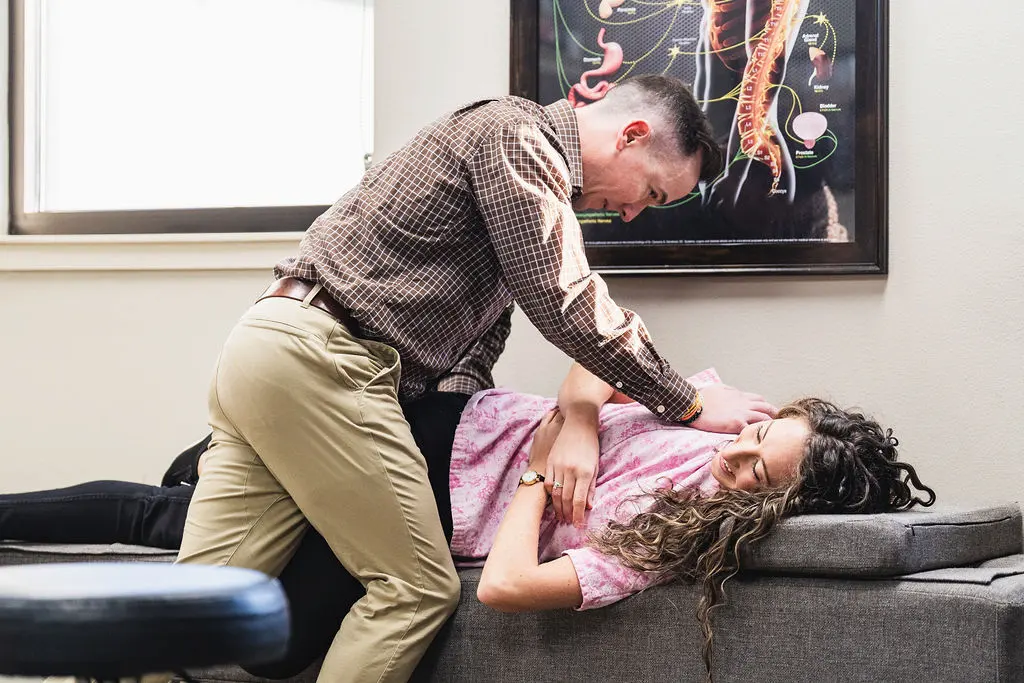
Many Cedar Falls office workers seek chiropractic care because their standing desk transition created new pain.
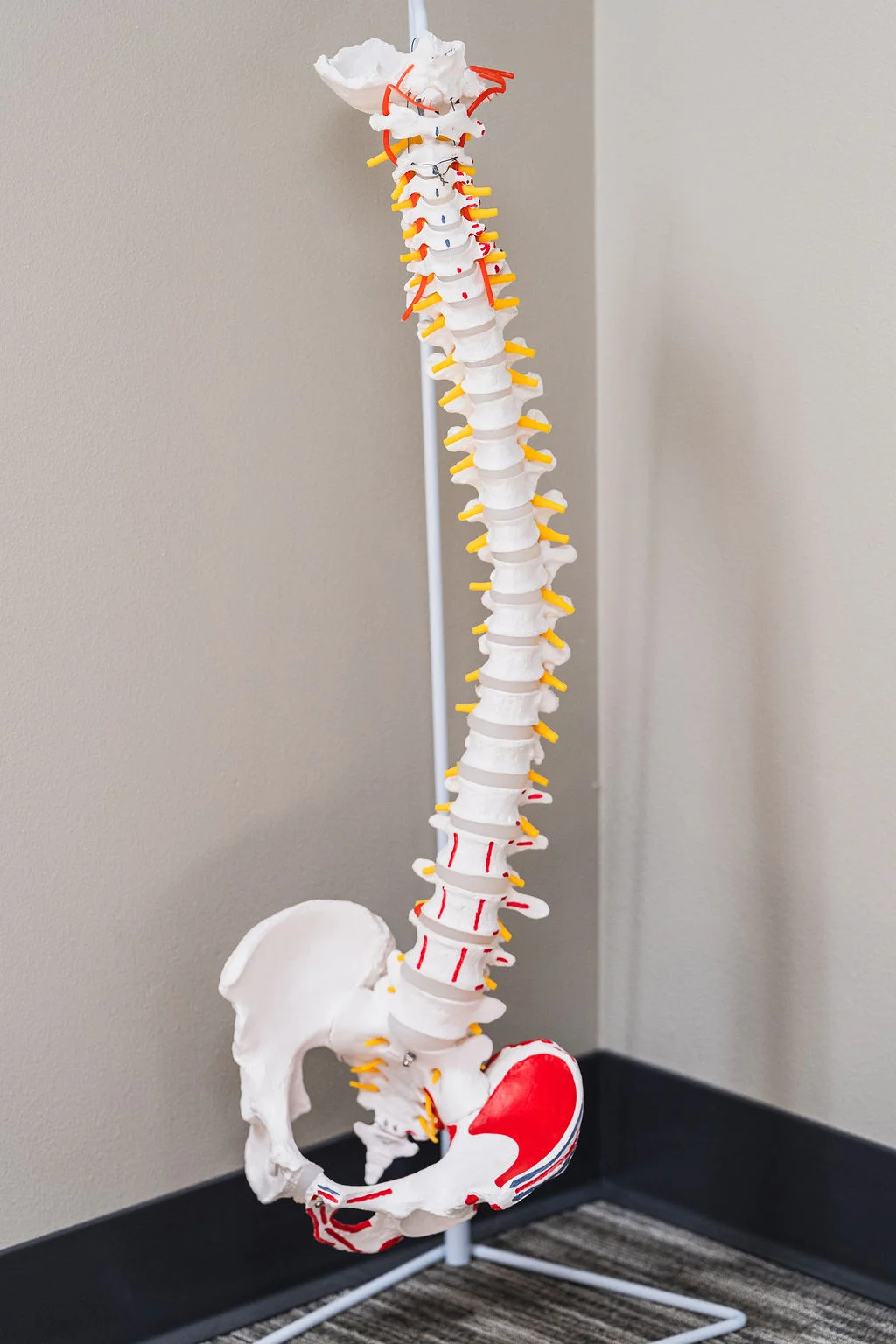
We identify the spinal dysfunctions causing problems. Often, these include existing misalignments from sitting that standing exacerbates.
Adjustments correct these misalignments, allowing proper standing mechanics. Your body can maintain good posture more easily when vertebrae are properly aligned.
We also provide specific advice about your standing desk setup and usage based on your particular spinal condition.
Some patients need more frequent care during their transition period as their body adapts to new demands.
Exercises That Support Standing Desk Use
Specific exercises help your body adapt to increased standing.
Calf Stretches
Stand facing a wall, one foot forward, one back. Keep back heel down and lean forward gently. Hold 30 seconds each side.
Hip Flexor Stretches
Prolonged sitting tightens hip flexors. These remain tight even when you start standing, affecting posture. Kneel on one knee, other foot forward, and lean forward gently.
Glute Strengthening
Bridges and clamshells strengthen glutes that help maintain proper standing posture and reduce lower back strain.
Core Work
Planks and bird dogs build the core stability needed for maintaining good posture while standing.
The Sit-Stand Desk Advantage
Adjustable sit-stand desks cost more than fixed-height standing desks but provide significant advantages.
You can easily alternate between sitting and standing. No need for separate desks or workstations.
Position heights can be fine-tuned exactly to your body dimensions.
On days when standing is more difficult (injury, fatigue, illness), you have the sitting option readily available.
If budget allows, sit-stand desks are worth the investment.
Common Mistakes Office Workers Make
Beyond the issues already discussed, certain patterns create problems.
Leaning on the Desk
Propping yourself up with forearms or hands on the desk shifts your weight forward and creates neck strain.
Locking Knees
Standing with fully locked knees reduces circulation and increases lower back stress. Keep a slight bend.
Ignoring Pain Signals
If standing hurts, sit down. Don’t push through significant pain out of commitment to your new standing desk.
Forgetting to Move
Even with perfect standing posture, static positions create problems. Set reminders to move.
When Standing Desks Aren’t Appropriate
Standing desks aren’t ideal for everyone. Some situations call for different solutions.
If you have significant lower back problems, prolonged standing might worsen symptoms. Sitting with proper support might be better.
Pregnant women in later stages often find standing uncomfortable. Don’t force it.
People with varicose vein problems or circulation issues should consult their doctor before extended standing.
Recent lower extremity injuries or surgeries make prolonged standing problematic.
Listen to your body. Standing desks are a tool, not a requirement.
The Walking Desk Alternative
Treadmill desks take the concept further by adding movement while working.
Walking at very slow speeds (1-2 mph) while working provides movement benefits without making typing or mousing difficult.
However, they’re expensive, noisy, and not practical for all office environments.
If interested, try before buying. Some people adapt easily. Others find walking and working simultaneously too challenging.
Signs Your Standing Desk Setup Isn’t Working
Certain symptoms indicate problems with your standing desk use or setup.
Increasing back pain rather than decreasing. New hip, knee, or foot pain. Headaches (often from monitor position). Shoulder and neck tension. Extreme fatigue that doesn’t improve with adaptation time.
If you experience these, don’t just quit standing. Get evaluated and adjust your setup or usage pattern.
The Real Goal: Movement Variation
Understanding the underlying principle helps: your body needs movement variation, not a “better” static position.
Sitting isn’t inherently bad. Standing isn’t inherently good. Static positions of any type create problems.
The healthiest approach combines sitting, standing, walking, and movement breaks throughout your workday.
Use your standing desk as one tool in creating movement variation, not as a complete solution.
Making Standing Work for You
If you’re a Cedar Falls or Waterloo office worker struggling with standing desk transition, you’re not alone.
Many people experience the same issues. The solution isn’t abandoning standing entirely. It’s correcting existing spinal problems, using proper technique, and building up gradually.
Chiropractic care helps your body adapt to new demands while correcting the dysfunctions that make standing difficult.
Schedule a consultation at Wayson Family Chiropractic or call 319-266-1119 if your standing desk is creating new back pain. Let’s help you use it correctly and comfortably.