Scoliosis treatment in Cedar Falls doesn’t have to start and end with a wait-and-watch approach. For many children and teens diagnosed with mild to moderate spinal curves, Gonstead chiropractic care offers a natural, non-invasive way to support spinal health and slow progression. The key is understanding what scoliosis actually is – and catching it early.
What Scoliosis Really Means for Your Child
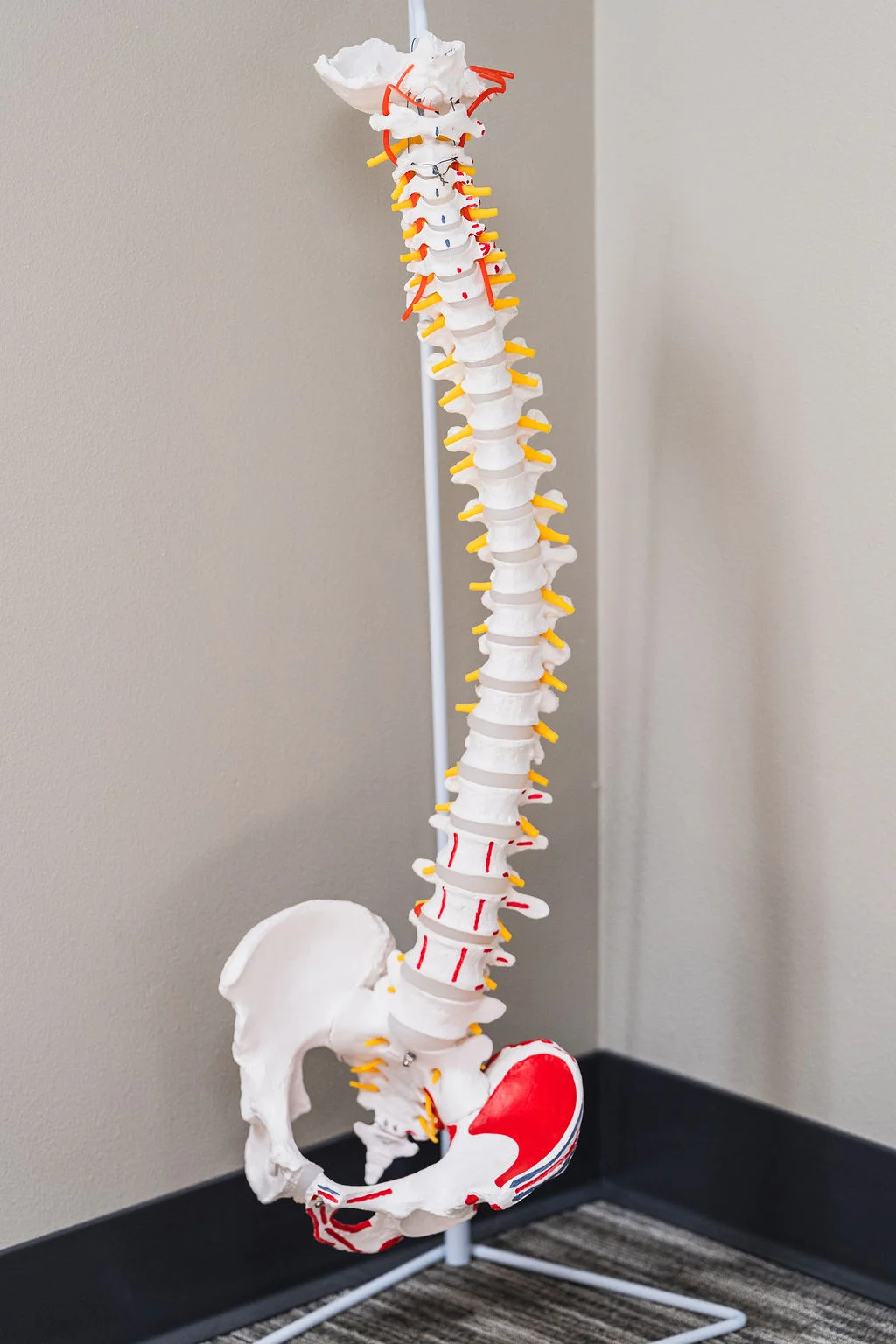
Scoliosis is an abnormal lateral curvature of the spine – a sideways bend that, when viewed from behind, shows the spine curving into a C or S shape rather than running straight. It affects roughly 2-3% of the population, and it most commonly appears during the growth spurts of adolescence.
Most parents first hear about scoliosis at a school screening or a pediatrician visit. The doctor notices something in your child’s posture – maybe one shoulder sits higher than the other, or one hip protrudes more. That’s often when the questions start.
Here’s the thing: a scoliosis diagnosis doesn’t automatically mean braces or surgery. Most curves are mild, and with proper monitoring and the right care, many children manage well without aggressive intervention. What matters most is how you respond after diagnosis.
How the Gonstead Technique Evaluates Scoliosis
At Wayson Family Chiropractic, we use the Gonstead technique’s 5-component analysis to evaluate every patient – and for scoliosis cases, that process matters more than most people realize.
Standard scoliosis screenings look for obvious postural changes. Gonstead analysis goes deeper. We start with a thorough case history – how your child moves, what activities they’re involved in, whether there’s any pain or fatigue. Then we move through visualization, instrumentation, and careful palpation before taking full-spine X-rays.
That last step is particularly important for scoliosis. Full-spine films let us see the entire curve in context – not just where it’s most visible, but how the spine compensates above and below. Without that complete picture, you’re only seeing part of what’s happening.
Once we have those X-rays, we measure the Cobb angle – the standard clinical measurement used to classify curve severity. This gives us a baseline, and it lets us track changes over time with precision.
What Chiropractic Care Can and Cannot Do for Scoliosis
It’s worth being honest here. Chiropractic care cannot straighten a structural scoliosis curve in the way surgery can. That’s not what we’re trying to do, and any provider who claims otherwise isn’t being straight with you.
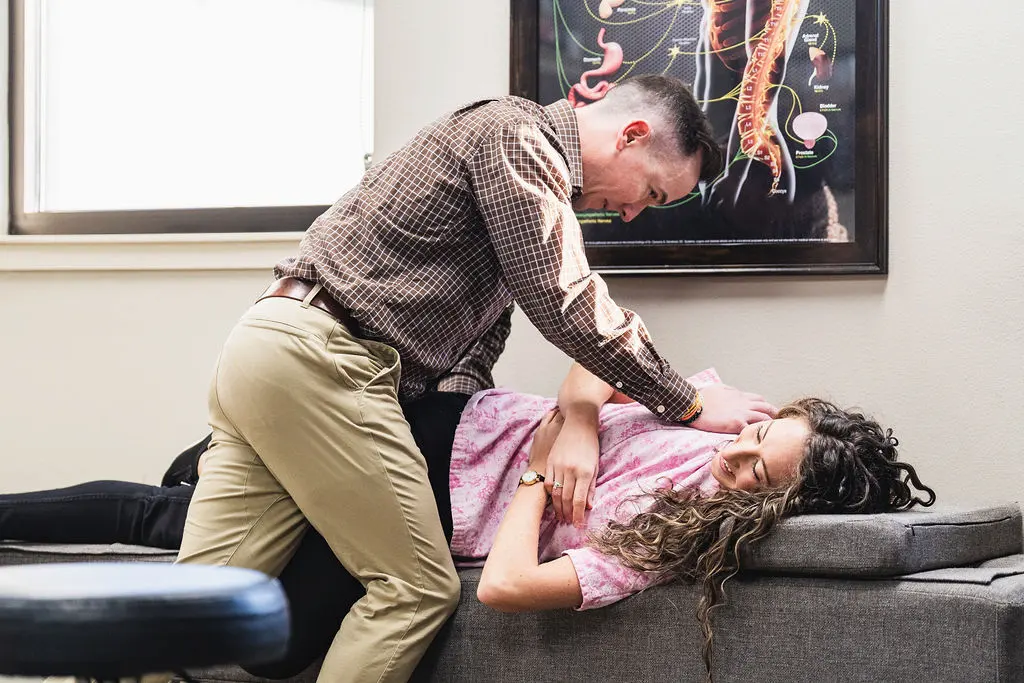
What Gonstead chiropractic can do is address the subluxations – the vertebral misalignments – that often accompany a scoliotic curve. When vertebrae are misaligned, the muscles around them compensate unevenly. That compensation creates tension, poor movement patterns, and sometimes pain. Addressing those specific segments helps restore more normal function to the spine.
For many of our Cedar Falls families, the goals of chiropractic care with scoliosis look like this: reduce discomfort, improve posture and symmetry, support healthy movement, and monitor the curve regularly to catch any changes early. That’s a realistic and meaningful set of outcomes – especially during the growth years when curves are most likely to progress.
The Growth Spurt Problem
Scoliosis and growth spurts are a challenging combination. During periods of rapid growth – typically between ages 10 and 16 – curves that were previously stable can progress quickly. This is one reason why early diagnosis and regular monitoring are so important.
We often see patients who were told their curve was “fine” at 10 degrees and didn’t follow up for two years. By the time they come back in, the curve has progressed into a range where more aggressive treatment options are on the table. That’s not inevitable – it’s preventable with consistent check-ins.
If your child has been diagnosed with scoliosis and is in a growth phase, regular visits aren’t just helpful – they’re important. We can catch changes early, adjust our approach when needed, and keep you informed at every step.
Signs That Warrant a Chiropractic Evaluation
Some parents come to us because their child already has a formal scoliosis diagnosis. Others come because something looks off but hasn’t been officially evaluated yet. Both situations are worth taking seriously.
Here are some things to watch for at home:
Uneven shoulders – one visibly higher than the other, especially when your child stands relaxed. Uneven hips or a prominent hip on one side. One shoulder blade that sticks out more than the other. A visible lean to one side when standing straight. Back or rib asymmetry when bending forward (this is the Adams forward bend test, which school nurses commonly use).
If you notice any of these in your child – even if they’re subtle – it’s worth getting a proper evaluation. The earlier we can establish a baseline, the better positioned we are to monitor and manage any curve that exists.
Scoliosis in Teenagers vs. Younger Children
The approach to scoliosis care does differ somewhat by age. In younger children (under 10), curves are less common but can be related to developmental factors that respond differently to care. In adolescents, idiopathic scoliosis – meaning there’s no clearly identified cause – is by far the most common type, and it’s strongly linked to growth patterns.
For the teenagers we see in Cedar Falls, Waterloo, and across the Cedar Valley, the concern is usually that combination of an active lifestyle and a growing spine. Sports, especially asymmetric ones like tennis, baseball, or volleyball, can put additional rotational stress on a spine that’s already working to compensate for a curve. That doesn’t mean your teen should stop playing – but it does mean their spinal health should be monitored more closely than average.
How We Work With Your Child’s Other Healthcare Providers
Scoliosis management often involves more than one provider. Your child’s pediatrician may be monitoring the curve. An orthopedic specialist might be involved. In some cases, a physical therapist or occupational therapist is part of the picture too.
We don’t operate in isolation. If your child has existing documentation from their pediatrician or orthopedist – including prior X-rays or Cobb angle measurements – bring those to the first appointment. That information is genuinely useful, and it gives us a fuller picture without having to start from scratch.
Our role is to address spinal function and subluxation patterns while keeping you informed about what we’re seeing. If at any point we feel something is beyond our scope or warrants specialist input, we’ll tell you directly and work alongside whatever care team you have in place.
Frequently Asked Questions About Scoliosis and Chiropractic
At what Cobb angle should I seek chiropractic care for my child?
There’s no strict cutoff. Mild curves (under 20 degrees) are where chiropractic care tends to be most relevant as a primary supportive approach. Curves in the 20-40 degree range often involve a more coordinated team approach. Curves above 40 degrees typically involve orthopedic management as the primary track. That said, chiropractic can still provide meaningful support at any curve size – the goals just shift depending on severity.
Is chiropractic safe for children with scoliosis?
Yes, when performed by someone trained in assessing and managing scoliotic spines. The Gonstead approach is precise – we only adjust segments that have been specifically identified through our analysis. This isn’t random manipulation. It’s targeted care based on what the X-rays and physical examination show.
Will my child need X-rays every visit?
No. Full-spine X-rays are typically taken at the initial evaluation and then at intervals to track curve progression – not at every appointment. The frequency depends on your child’s age, how fast they’re growing, and whether the curve appears stable.
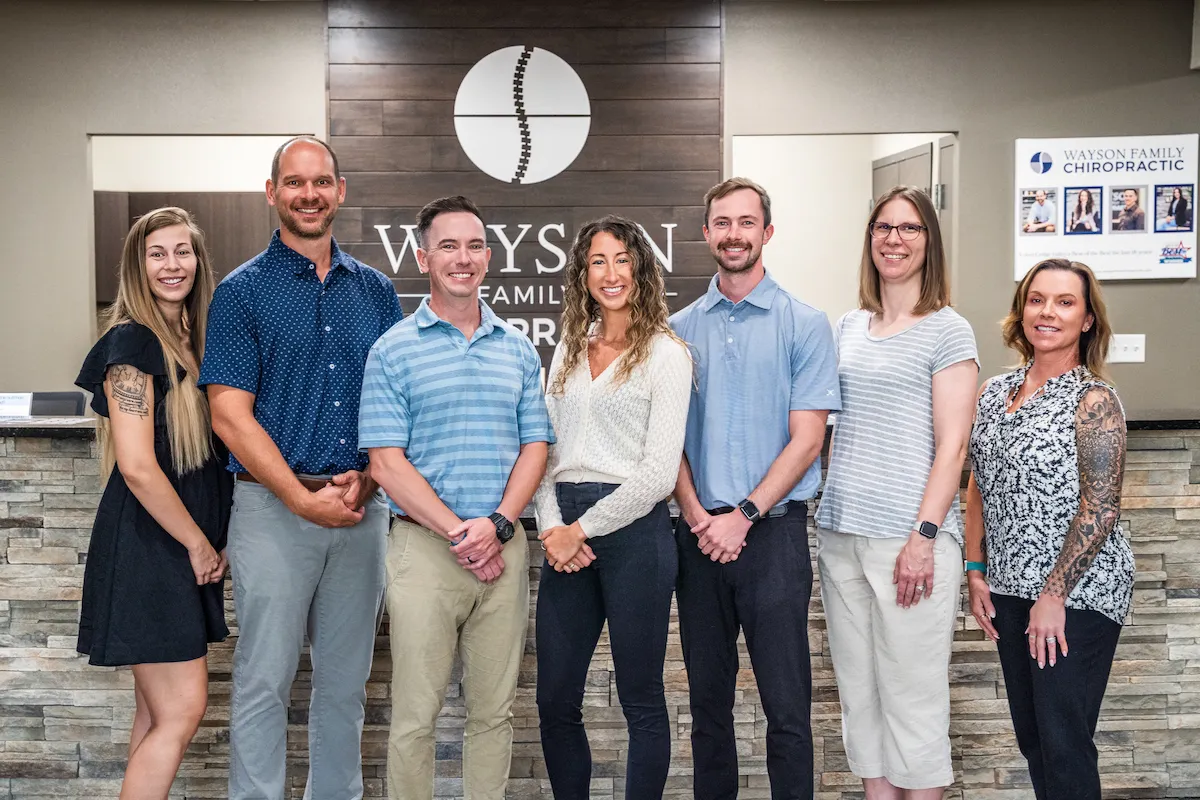
If you have questions about your child’s spinal health or want to get a baseline evaluation, our team at Wayson Family Chiropractic is here to help. Call us at 319-266-1119 or schedule an appointment online to take the first step.