
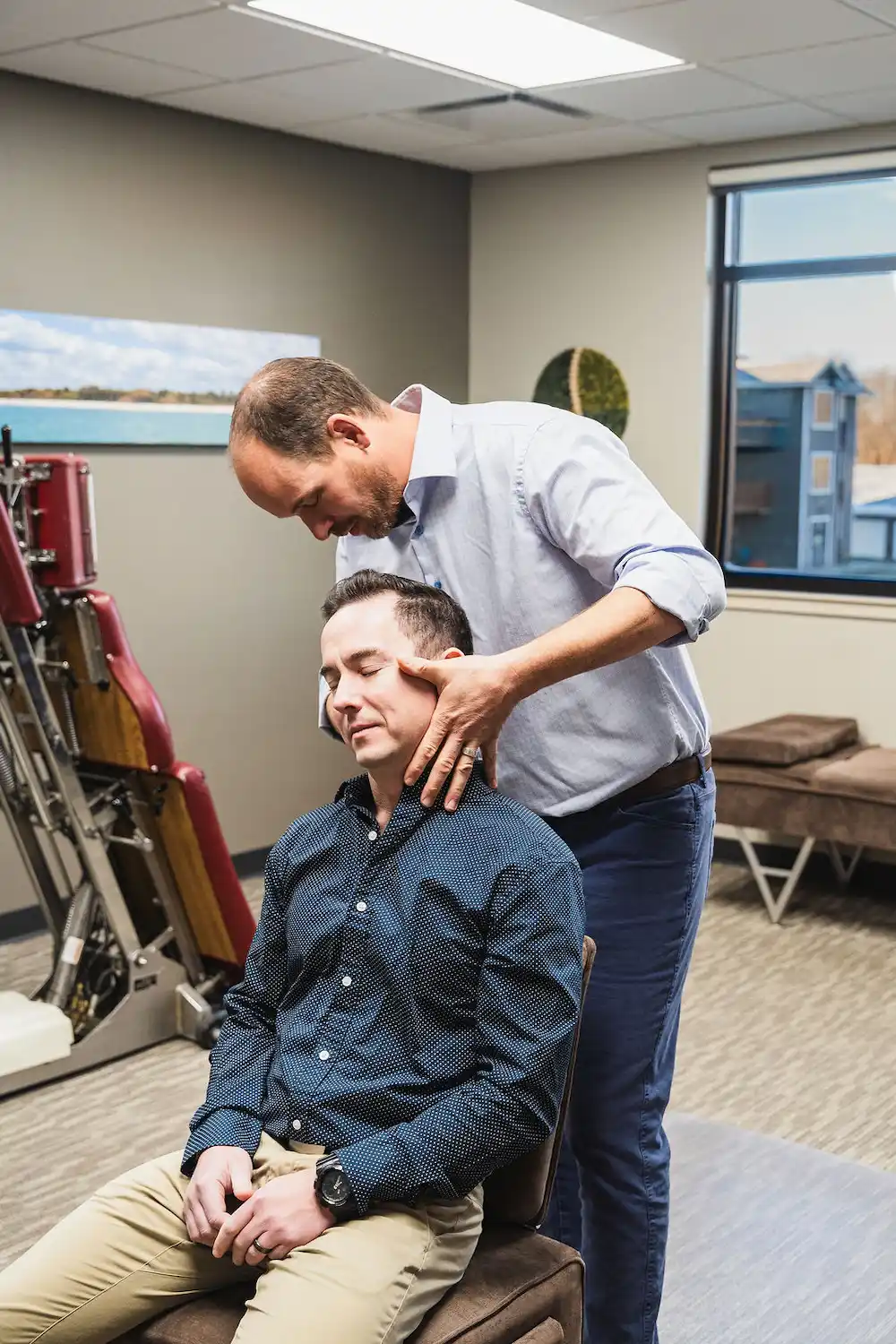
It’s one of the most misunderstood things about car accidents: you can walk away feeling fine and then wake up in serious pain two or three days later. Delayed whiplash symptoms are common, and they happen because the adrenaline of a crash masks pain, while the underlying soft tissue injury takes time to become inflamed and noticeable. At Wayson Family Chiropractic in Cedar Falls, we regularly see patients whose symptoms didn’t show up until days after their accident, and getting checked early makes a real difference.
Why You Feel Fine Right After a Crash
When you’re in a car accident, your body floods with adrenaline and other stress hormones. This is your fight-or-flight response kicking in, and it’s designed to help you handle an emergency. One of the things it does is suppress pain, so you can function in a crisis without being stopped by injury.
That’s genuinely useful in the moment, but it also means you may not feel the extent of what just happened to your body. People routinely get out of a car after a collision, tell the officer they’re fine, decline medical attention, and drive home, all while an injury is developing that they simply can’t feel yet.
As the adrenaline wears off over the hours and days that follow, that protective masking effect fades. And that’s when the pain that was there all along finally makes itself known.
What’s Actually Happening to Your Neck
Whiplash is an injury to the soft tissues of the neck, the muscles, ligaments, and tendons, caused by the rapid back-and-forth snapping motion of the head during a collision. Even a low-speed crash can generate enough force to whip the head forward and back faster than the neck is built to handle.
That violent motion overstretches and can tear the soft tissues supporting your cervical spine. It can also jar vertebrae out of proper alignment, creating the kind of subluxations that produce ongoing problems if left unaddressed.
Here’s the part that explains the delay. Soft tissue injuries take time to become inflamed. When you stretch or tear a ligament, the inflammatory response, the swelling, stiffness, and pain, builds over the following hours and days rather than appearing instantly. It’s similar to how you often feel worse the day after a hard workout than you did during it. The injury happened at the moment of impact, but the symptoms peak later.
The Symptoms That Tend to Show Up Late
Delayed symptoms after a car accident can take several forms, and they don’t always announce themselves as obvious neck pain.
Neck pain and stiffness are the most common, often appearing a day or two after the crash as the inflammation sets in. Headaches frequently develop, typically starting at the base of the skull, because of the strain on the upper neck. Reduced range of motion shows up as difficulty turning your head comfortably.
Some people experience shoulder and upper back pain, dizziness, fatigue, or even tingling into the arms if nerves are involved. Others notice trouble concentrating or sleeping. Because these symptoms can appear gradually and separately, people don’t always connect them back to the accident, which is part of what makes delayed whiplash so easy to overlook.
Why Early Care Matters Even If You Feel Okay
This is the key takeaway. Because whiplash symptoms are so often delayed, feeling fine immediately after a crash is not reliable evidence that you’re uninjured. Getting evaluated early, even before symptoms appear, is one of the smartest things you can do after an accident.
There are a couple of reasons for this. First, early evaluation can catch injuries and misalignments before they have a chance to settle into more established, harder-to-treat patterns. Addressing a fresh whiplash injury tends to go better than addressing one that’s been left for weeks while compensation patterns develop.
Second, untreated whiplash has a real tendency to become a chronic problem. What might have resolved with prompt care can turn into months or years of recurring neck pain, headaches, and stiffness if the underlying injury and any misalignments are never properly addressed. We see this pattern in patients who had an accident long ago, never got checked, and have been dealing with neck issues ever since.
Our post on whiplash recovery after car accidents covers what that treatment process looks like in more detail.
How Chiropractic Approaches Whiplash
Whiplash is squarely in the wheelhouse of chiropractic care, because it so often involves exactly the combination of soft tissue injury and vertebral misalignment that the Gonstead technique is designed to address.
At our Cedar Falls practice, evaluation starts with the full 5-component analysis, including X-rays, to identify precisely what happened to your cervical spine. That tells us which segments were knocked out of alignment and what condition the surrounding structures are in. From there, gentle, specific adjustments restore proper alignment and movement, while the care plan supports the healing of the injured soft tissues.
The goal is to address the injury properly and early, so it heals well rather than turning into a chronic problem you carry for years.
A Note on Documentation and Insurance
If you’ve been in an accident, getting evaluated promptly also creates a clear record connecting your symptoms to the crash. This matters for insurance and any claims related to the accident, since a gap between the accident and seeking care can complicate things. Our team can help you understand how coverage works for auto injury care. Getting checked early protects both your health and your documentation.
Common Questions
How long after an accident can symptoms appear?
Most delayed whiplash symptoms show up within the first two to three days, but they can sometimes take longer to fully develop. This is why getting evaluated soon after a crash is wise even if you feel okay initially.
I was in a minor fender-bender. Could I still have whiplash?
Yes. Whiplash can occur even in low-speed collisions. The force needed to injure the neck’s soft tissues is less than most people assume, and vehicle damage doesn’t always reflect the strain on your body.
Should I see a chiropractor or a medical doctor after a crash?
For significant trauma or any emergency symptoms, seek medical care first. For the soft tissue and spinal alignment issues that whiplash commonly causes, chiropractic is well-suited, and the two can work together. We’re glad to coordinate with your other providers.
If you’ve been in a car accident recently, don’t wait for the pain to tell you something’s wrong. Call Wayson Family Chiropractic at 319-266-1119 or reach out online for an evaluation here in Cedar Falls, even if you’re feeling fine right now.