
Yes, desk work commonly contributes to forward head posture. Hours spent looking at a screen that’s too low, reaching for a keyboard, and slumping in a chair let the head drift forward of the shoulders, which adds load to the neck and upper back muscles. Over time, that can lead to neck stiffness, upper back pain, shoulder tension, and headaches. The best fixes combine a better desk setup, frequent movement breaks, strengthening exercises, and hands-on care when stiffness has set in. At Wayson Family Chiropractic in Cedar Falls, we help office workers and remote workers feel better at their desks.
What Forward Head Posture Is
In a neutral posture, your ears sit roughly over your shoulders when viewed from the side, and your head is balanced over your spine. Forward head posture means your head sits in front of your shoulders, often with rounded shoulders and a rounded upper back.
Your head weighs about 10 to 12 pounds. When it’s balanced, your neck muscles don’t have to work very hard. As it drifts forward and down, the load on those muscles rises sharply. One widely cited model estimates that at steeper downward angles, the neck handles several times the head’s weight. Hold that position for hours, and the muscles tire and tighten.
How Desk Work Creates the Problem
- Low monitors: screens set too low pull your head down and forward.
- Laptops: the screen and keyboard are attached, so one is always in the wrong place.
- Distant keyboards and mice: reaching forward pulls your shoulders and head with you.
- Unsupportive chairs: without lumbar support, you slump and your head drifts forward.
- Phones: looking down during breaks adds even more forward head time.
Symptoms Desk Workers Notice
- Neck pain and stiffness, often by midday
- Upper back pain between the shoulder blades
- Shoulder tension that keeps coming back
- Tension headaches starting at the base of the skull
- Reduced range of motion when turning your head
Our post on whether poor posture can cause headaches explains that connection in more detail.
When to See a Doctor
See a doctor promptly for numbness, tingling, or weakness in your arms or hands, clumsiness in your hands, or neck pain with fever. Call 911 for neck, jaw, or arm pain with chest pain or shortness of breath, or a sudden, severe headache with dizziness, vision changes, or trouble speaking.
How to Stop Leaning Forward at Your Desk
Monitor Position
Set the top edge of your monitor at or slightly below eye level, about an arm’s length away. If you use a laptop, raise it on a stand and use a separate keyboard and mouse.
Keyboard and Mouse
Keep your keyboard close enough that your elbows rest near your sides at about a 90-degree angle. Keep your mouse at the same height and close to your body.
Chair Setup
Adjust your seat so your feet rest flat on the floor. Sit back in the chair so your lower back is supported, using a small cushion if needed.
Phone Habits
Hold your phone closer to eye level, and use a headset or speaker for calls instead of cradling the phone between your ear and shoulder.
Move Often
Even a perfect setup can’t make up for sitting still for hours. Stand up and move every 30 to 45 minutes, roll your shoulders, and reset your posture. The 20-20-20 rule also helps: every 20 minutes, look at something 20 feet away for 20 seconds, which breaks up a fixed forward gaze.
Exercises for Forward Head Posture
- Chin tucks: sit tall and gently draw your chin straight back, making a double chin. Hold for 5 seconds and repeat 10 times.
- Shoulder blade squeezes: draw your shoulder blades back and down, hold for 5 seconds, and release.
- Doorway chest stretch: place your forearms on a doorframe and gently lean forward for 30 seconds.
- Upper back extension: sit tall with your hands behind your head and gently arch your upper back over the chair back.
These exercises are one of the most important parts of improving posture, since stronger deep neck and upper back muscles make a better position easier to hold. Stop any exercise that causes sharp pain, dizziness, or tingling into your arm.
How Chiropractic Care Helps
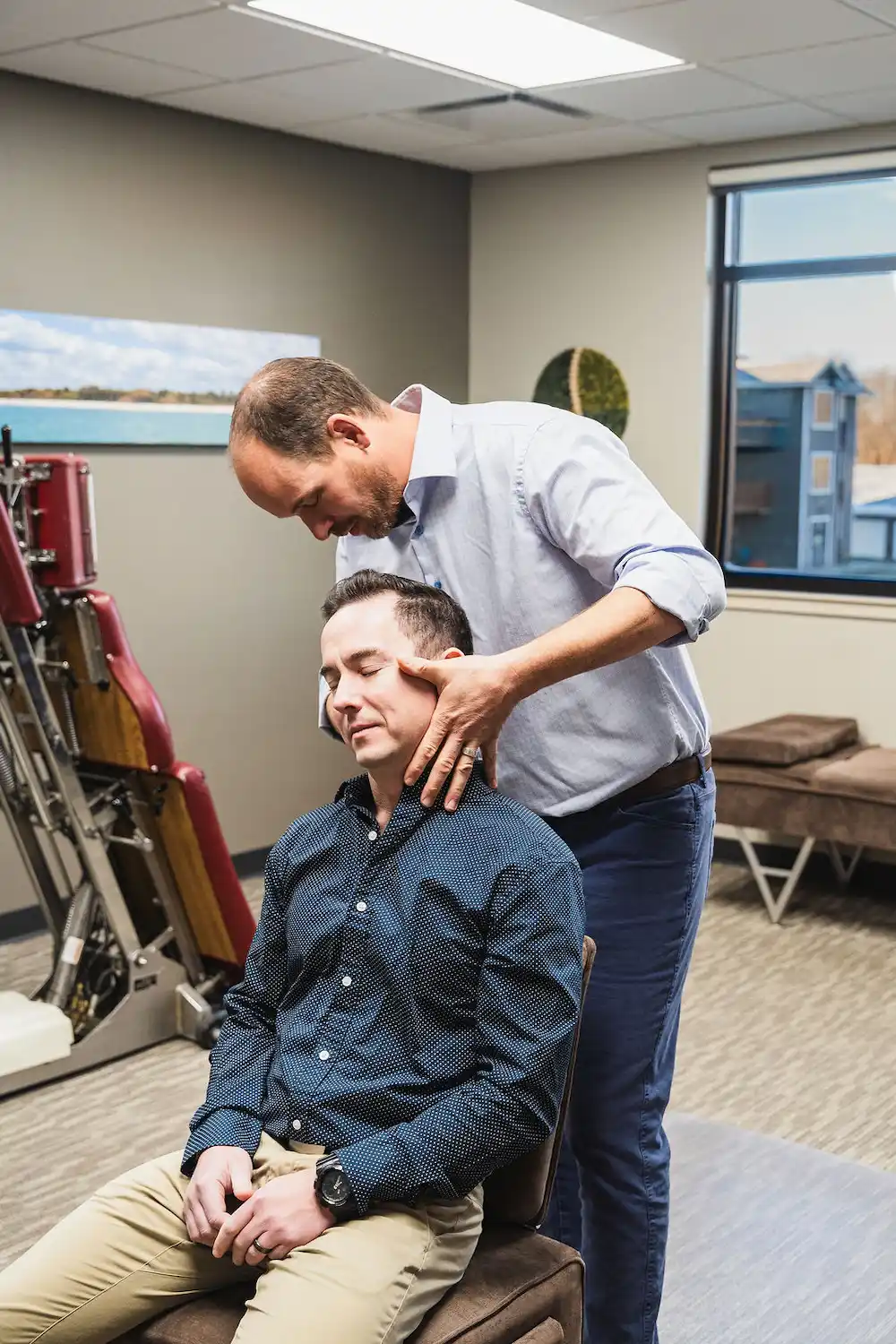
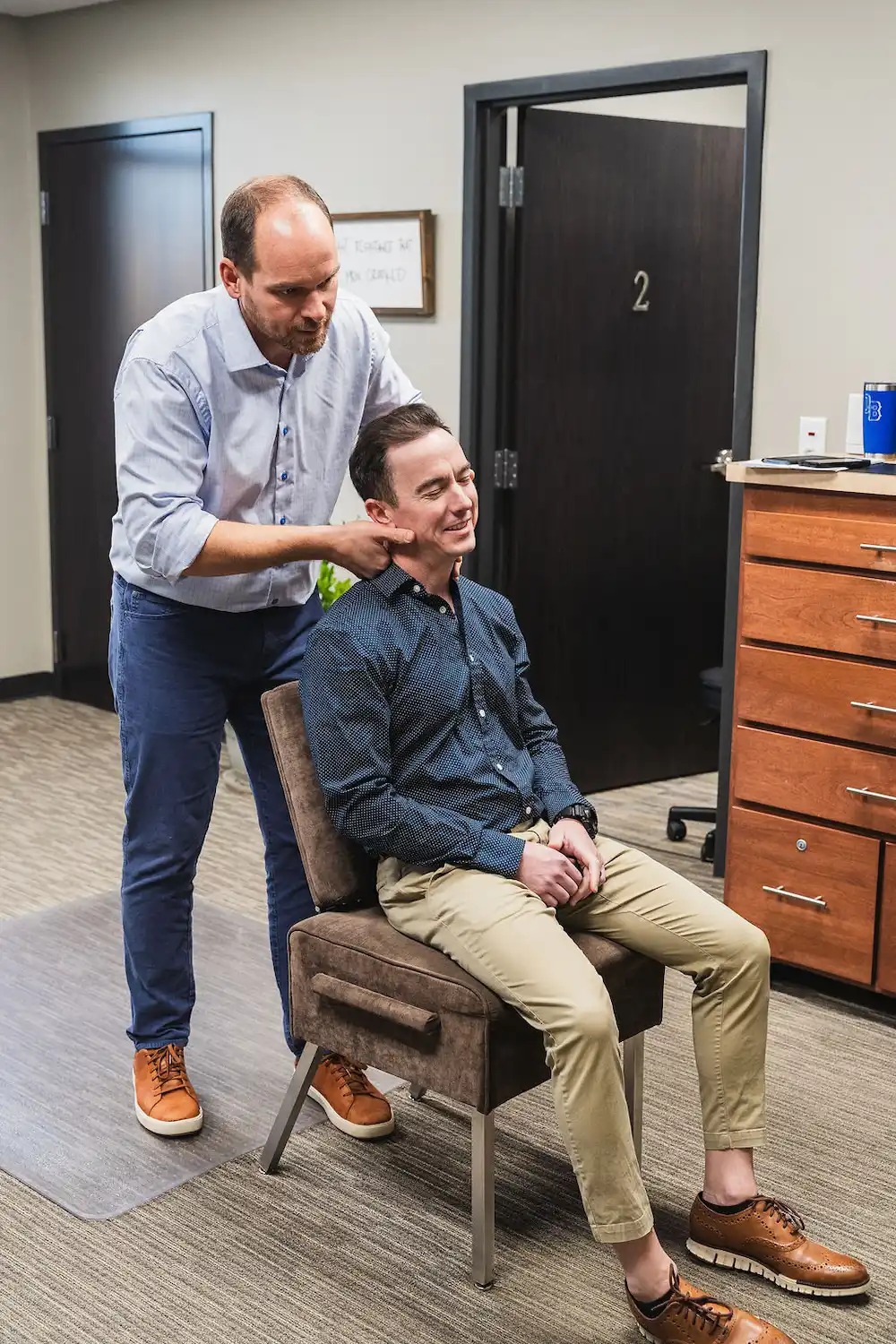
When desk posture has left your neck and upper back stiff, hands-on care can help. We start with a thorough analysis using the Gonstead technique, including your history, a posture evaluation, palpation, and X-rays when they’ll add useful information. Specific adjustments help restore motion to stiff joints in the neck and upper back, which can ease tension and make good posture more comfortable to hold.
Massage therapy can also help release tight neck, shoulder, and chest muscles. Adjustments, massage, exercises, and a better desk setup work best together. Every person is different, and results vary.
How Long Does It Take to Improve?
Many people notice less stiffness and fewer headaches within a few weeks of combining care, exercises, and desk changes. Lasting posture changes usually take a few months of consistent habits, since the patterns developed over years.
Remote Workers and Students
Home offices are often worse than workplace setups, with laptops on couches, kitchen chairs, and beds. If you work from home, a laptop stand, external keyboard and mouse, and a supportive chair go a long way. Teens and college students who spend hours on phones and laptops benefit from the same habits.
Frequently Asked Questions
Does desk work cause forward head posture?
It’s a common contributor. Low screens, reaching for keyboards, and sitting for long periods all encourage the head to drift forward.
Can forward head posture be fixed?
For most people, it can improve meaningfully with exercises, a better desk setup, movement breaks, and hands-on care when needed.
What’s the best exercise for forward head posture?
Chin tucks are one of the most useful, since they strengthen the deep neck muscles that help hold your head over your shoulders.
Get Help in Cedar Falls
If you’re an office or remote worker in Cedar Falls or Waterloo dealing with neck pain, headaches, or shoulder tension from desk work, we’d be glad to help. Call 319-266-1119 or schedule a consultation at Wayson Family Chiropractic.