
Warehouse work does a specific kind of damage to the spine – and it’s not random. The same motions, the same postures, the same physical demands every shift create predictable patterns of strain that show up consistently in the workers we see from Cedar Falls and Waterloo. Gonstead chiropractic care is well-suited to these patterns because it identifies exactly which vertebral segments have been affected and addresses those specifically, rather than treating the whole spine the same way every visit.
What Makes Warehouse Work Hard on the Spine
Warehouse and distribution work involves a particular combination of physical stressors that most desk jobs don’t. Lifting – sometimes heavy, sometimes repetitive, often awkward – is the most obvious one. But the full picture is more complicated than that.
Sustained forward bending while loading or unloading pallets puts the lumbar spine in a compromised position repeatedly throughout the day. Reaching overhead to pick or stack from high shelves creates cervical and thoracic strain. Twisting while carrying – turning to drop a box on a conveyor without fully repositioning the feet – puts rotational force through the lumbar discs in a way they’re not designed to handle well under load.
Then there’s the walking surface factor. Concrete floors are unforgiving. Long shifts on hard surfaces without adequate support affect not just the feet, but how force travels up through the knees, hips, and into the lower back. Many warehouse workers don’t connect their chronic back pain to their flooring – but it’s a real contributing factor.
And for workers using handheld scanners or operating equipment that requires sustained arm positions, upper back and neck tension builds up in ways that can eventually refer pain into the shoulders and arms.
The Most Common Conditions We See in Warehouse Workers
After nearly 20 years of treating working adults in the Cedar Valley, the patterns are pretty clear. The most frequent presentations from warehouse and distribution workers involve the following:
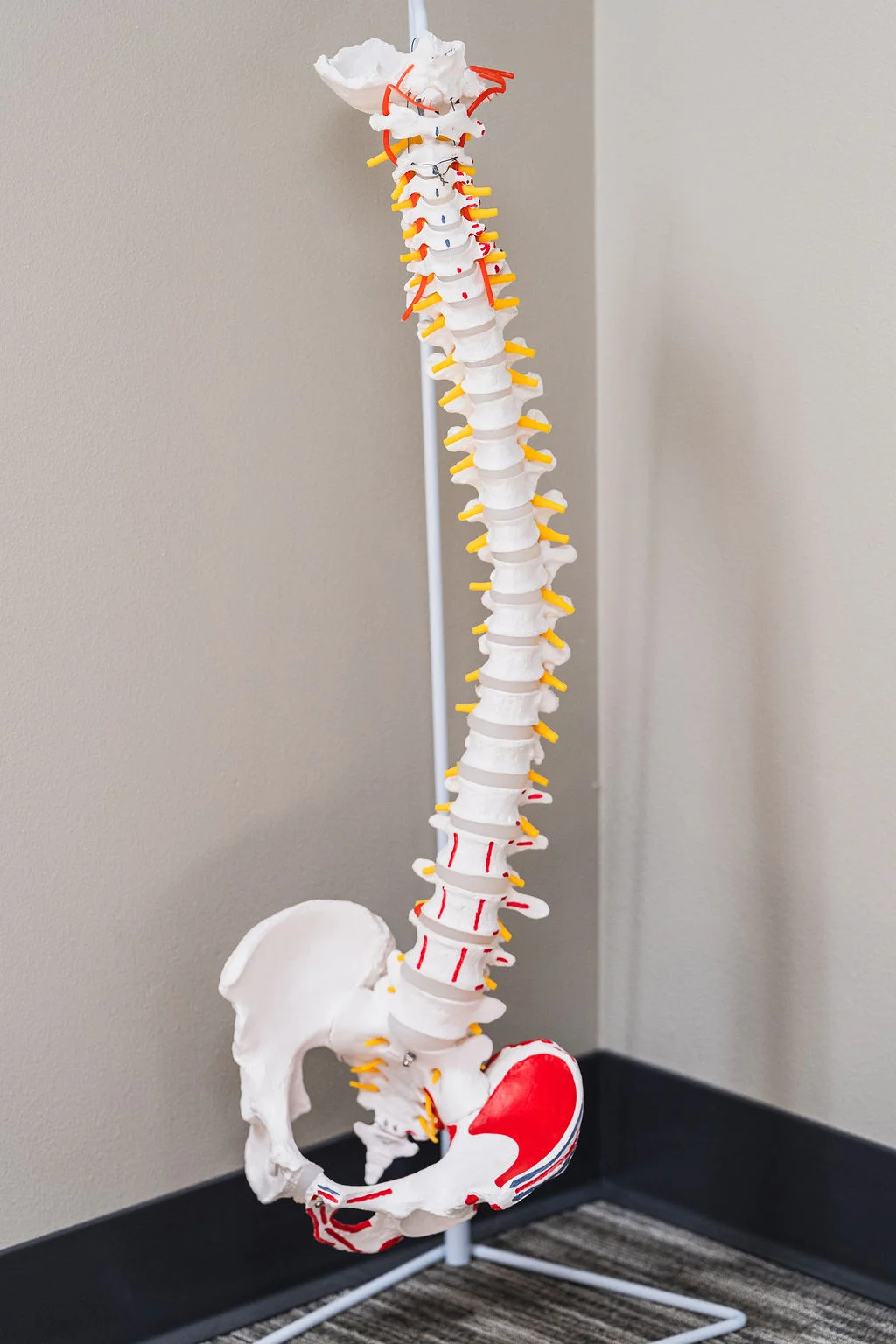
Lumbar subluxations from repetitive lifting and forward bending. These are vertebral misalignments in the lower back that create nerve interference, leading to local pain, referred pain, and sometimes sciatica-like symptoms down the legs.
Sciatica itself – shooting or burning pain down one or both legs – is something we treat regularly in warehouse workers. When lumbar discs are compressed repeatedly or the piriformis muscle is chronically tight from sustained postures, the sciatic nerve gets irritated. It can make sitting, standing, and walking all uncomfortable at once.
Mid-back and thoracic pain from reaching, twisting, and carrying. This is often dismissed as “just soreness” early on, but left unaddressed, thoracic subluxations affect posture and breathing mechanics in ways that compound over time.
Neck pain and upper back tightness from overhead work and scanner use. This is increasingly common as warehouse environments become more technology-dependent. Looking up or holding the same arm position for extended periods creates cervical strain that can lead to headaches, shoulder tension, and reduced range of motion.
Why the Root Cause Matters More Than the Symptom
A lot of warehouse workers deal with back pain by powering through it, taking over-the-counter pain relievers, or using heat and ice. Those strategies address the symptom in the short term – but they don’t change anything about the underlying spinal mechanics that created the problem.
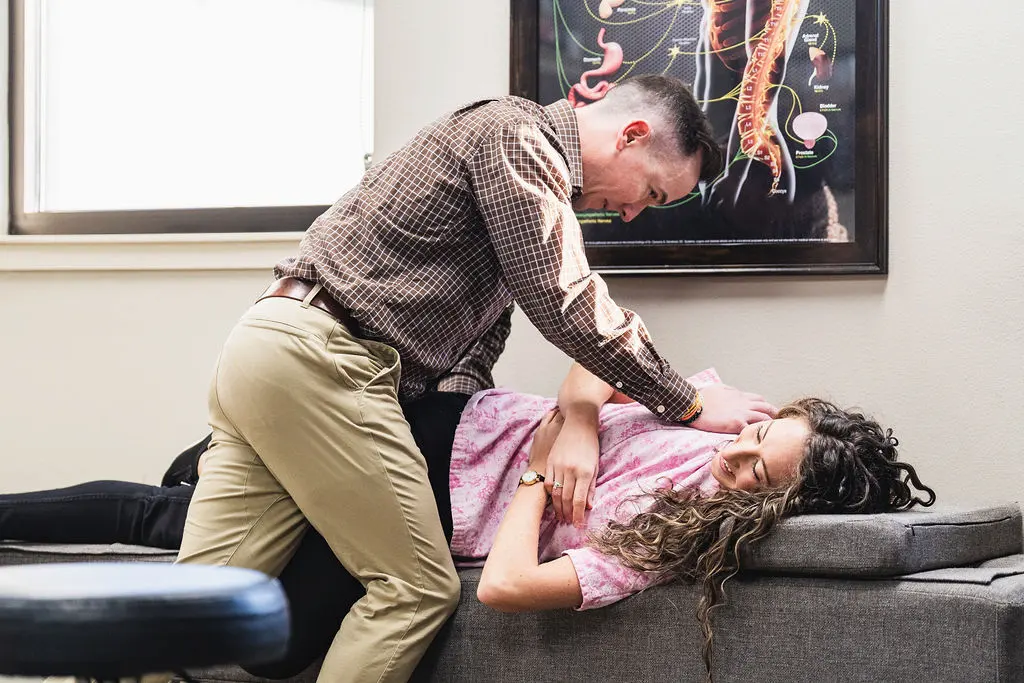
This is where Gonstead chiropractic offers something different. The 5-component Gonstead analysis – which includes full case history, postural assessment, Nervoscope instrumentation, palpation, and full-spine X-rays when indicated – is designed to identify the exact vertebral segments that have been affected. Not a general region. The specific levels.
From there, only those subluxated segments receive adjustment. That precision matters for workers who are back on the job quickly and can’t afford a care plan that creates unnecessary soreness or disruption. You get targeted care at exactly the segments that need it – nothing more, nothing less.
The Cumulative Strain Problem
One thing that distinguishes warehouse workers from someone who hurt themselves in a single incident is the nature of cumulative strain. There’s rarely one moment where something “went out.” It builds – weeks or months of small insults to the same spinal segments, each one slightly worsening the alignment and the nerve interference, until one day the body can’t compensate anymore and the pain becomes impossible to ignore.
By the time most workers come in, the problem has been building for longer than they realize. The good news is that the same Gonstead analysis that identifies where the damage is also reveals the compensation patterns the spine has developed. Understanding those patterns tells us how to sequence care effectively and what to expect in terms of recovery.
It also explains why some people get better faster than others. Someone who comes in at the early stages of cumulative strain responds more quickly than someone who has been compensating for two years. If you’re in the Cedar Falls or Waterloo area and you work in a warehouse – even if you feel “okay” most days – getting a baseline spinal evaluation is a genuinely smart preventive move.
Practical Strategies to Reduce Strain on the Job
Chiropractic care does its best work when paired with some changes to how you work. These aren’t complicated – but they make a real difference when applied consistently.
Lift with your hips and legs, not your back. This gets repeated so often it sounds like background noise, but it’s the single most effective mechanical change you can make. Set your spine in a neutral position before picking anything up, and drive the movement through your legs.
Reposition your feet before twisting. Turning at the waist while your feet stay planted is one of the most disc-damaging patterns in warehouse work. Take the extra step to move your feet with your torso instead of rotating through the lumbar spine under load.
Take microbreaks. Two minutes of movement every 45-60 minutes is significantly better for your spine than staying in one position for hours. Even walking to get water or briefly standing upright between lifting tasks helps reset the muscular tension that builds during sustained postures.
Invest in good footwear. For workers on concrete all day, supportive footwear isn’t a luxury – it changes how forces travel through your entire lower kinetic chain. Talk to us about whether orthotics might be useful for your specific situation.
What to Tell Your Employer
Workers’ compensation and employer wellness programs vary significantly across Cedar Falls and Waterloo area businesses. If your back pain is work-related, it’s worth understanding your rights and your options. Wayson Family Chiropractic accepts a range of insurance plans, and our team can help you understand what’s covered.
We also work with patients who want documentation of their condition for workplace accommodation requests. If you need to demonstrate that your back pain is affecting your capacity to perform certain tasks safely, a clinical evaluation and thorough records from our practice give you that documentation. Check our insurance and coverage page for more details on what we work with.
You Don’t Have to Accept Chronic Pain as Part of the Job
This is something worth saying plainly. Back pain is common in warehouse work, but common doesn’t mean inevitable or permanent. The spinal patterns that develop from repetitive strain respond well to targeted care – especially when that care addresses the root misalignment rather than just the surface-level discomfort.
We’ve worked with a lot of physical laborers and industrial workers in the Cedar Valley over the years. The people who do best are the ones who stop treating pain as a signal to power through and start treating it as useful information about what their spine needs.
If you’re a warehouse worker in Cedar Falls, Waterloo, or anywhere in the area dealing with back, neck, or leg pain, give Wayson Family Chiropractic a call at 319-266-1119 or reach out online to schedule an evaluation.