A bulging disc and a herniated disc are related but not the same thing, and the distinction matters more than most people realize. In simple terms, a bulging disc is when the disc flattens and extends outward beyond its normal boundary, while a herniated disc is when the inner material actually breaks through the outer wall. At Wayson Family Chiropractic in Cedar Falls, we see both regularly, and knowing which one you’re dealing with shapes the entire approach to care.
What a Spinal Disc Actually Is
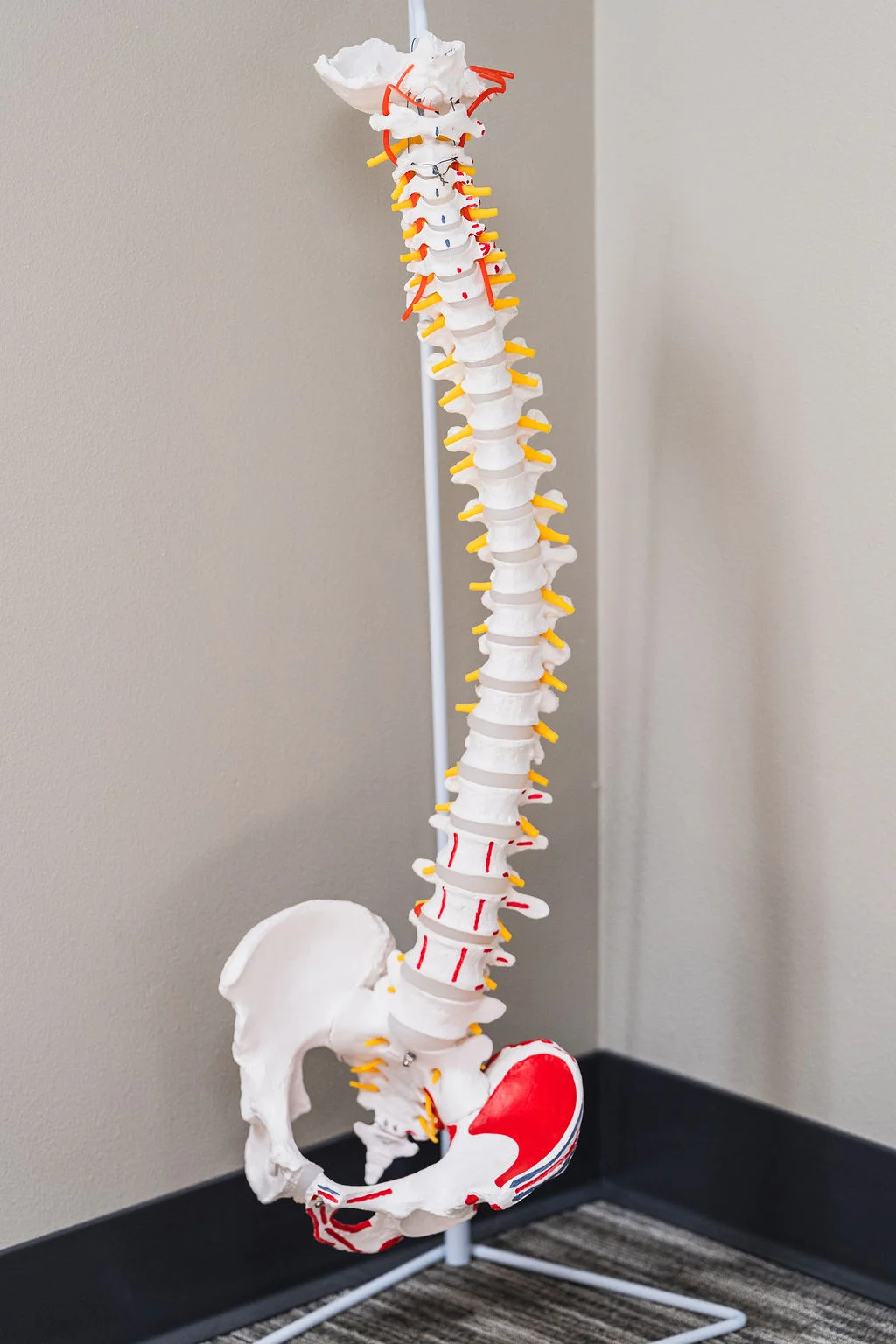
To understand the difference, it helps to know what a disc is in the first place. Between each of the vertebrae in your spine sits a disc that acts as a cushion and shock absorber. Each disc has two parts: a tough outer ring called the annulus fibrosus, and a soft, gel-like center called the nucleus pulposus.
Think of it like a jelly doughnut. The dough is the firm outer ring, and the jelly is the soft center. That structure is what lets your spine bend, twist, and absorb the constant load of daily movement. When something goes wrong with a disc, it usually involves one or both of these parts.
Both bulging and herniated discs involve this structure being compromised, but they happen in different ways and to different degrees.
What a Bulging Disc Is
A bulging disc is generally the milder and more common of the two. It happens when the disc loses some of its height and the outer wall extends outward beyond where it should sit, a bit like a tire that’s slightly underinflated and bulges out at the bottom under the weight of the car.
Importantly, with a bulging disc, the outer ring stays intact. Nothing has broken through. The disc is simply pressing outward more than it should, often across a broad area rather than one specific point.
Bulging discs are frequently part of the normal aging process. Many people have bulging discs and never know it, because the bulge doesn’t always press on anything sensitive. It’s when the bulge starts to contact a nearby nerve that symptoms begin to show up.
What a Herniated Disc Is
A herniated disc is a step further along. Here, the outer ring has actually torn or cracked, and some of the soft inner material pushes out through that opening. Going back to the jelly doughnut, this is when the jelly squeezes out through a break in the dough.
A herniation is usually more focal, meaning it protrudes at a specific point rather than across a broad area. And because the inner material is now outside where it belongs, it can press directly on a nerve root and also trigger an inflammatory response, since that inner material is chemically irritating to the surrounding tissue.
This combination, direct pressure plus chemical irritation, is why herniated discs often produce more intense and more specific symptoms than a bulging disc. You may also hear a herniation called a slipped disc or a ruptured disc. These are informal terms for the same thing, though “slipped” is a bit misleading, since the disc doesn’t actually slip anywhere.
How the Symptoms Differ
The symptoms of each can overlap, but there are some general patterns worth knowing.
A bulging disc, when it causes symptoms at all, often produces a more diffuse, aching discomfort. You might feel general stiffness, a dull ache, or mild radiating discomfort if the bulge is contacting a nerve. Some bulging discs cause no symptoms whatsoever.
A herniated disc tends to produce sharper, more specific symptoms. Because the material is often pressing directly on a nerve root, you may feel shooting pain, numbness, tingling, or even weakness that travels along the path of that nerve. When this happens in the lower back, it commonly shows up as sciatica, with pain radiating down through the buttock and leg. In the neck, it can radiate down the arm.
That said, symptoms alone don’t give a definitive answer. A significant bulge can produce strong symptoms, and a small herniation might produce mild ones. This is exactly why proper evaluation matters rather than guessing based on how it feels.
Why the Distinction Matters for Care
Here’s where it becomes practical. Knowing whether you have a bulge or a herniation, and where, and how severe, changes how we approach your care.
At our Cedar Falls practice, the Gonstead technique relies on full-spine X-rays and a thorough 5-component analysis precisely because disc issues need to be understood accurately before anything is done. Disc height, spacing, and the relationship between vertebrae all show up in that analysis, and they inform whether adjustment is appropriate, which segments to address, and how to approach them.
A disc issue is not a situation for random, forceful manipulation. It calls for precision, and it calls for knowing exactly what you’re working with. In some cases, imaging beyond X-ray, such as an MRI, is warranted to see the disc and soft tissue in detail, and we’ll refer for that when it’s the right call.
Can Chiropractic Help With Disc Problems?
For many people with bulging or herniated discs, conservative care including chiropractic can be genuinely helpful, and it’s worth trying before considering surgical options in most non-emergency cases.
The goal of chiropractic care with disc issues is to improve spinal mechanics, reduce the nerve interference and irritation the disc is causing, and support the body’s natural healing process. Precise adjustments to the affected region can help take pressure off the involved structures and restore better movement.
What honest care looks like is this. We’re not going to claim we can push a herniated disc back into place with a single adjustment, because that’s not how it works. What we can do is address the spinal function around the affected disc, reduce the mechanical stress contributing to the problem, and give your body a better environment to heal. Many patients in Cedar Falls and Waterloo find meaningful relief this way. Some cases, particularly those with progressive neurological symptoms, need medical or surgical involvement, and we’ll tell you honestly if yours is one of them.
When to Take Symptoms Seriously
Most disc issues are not emergencies, but certain symptoms warrant prompt medical attention rather than waiting. Progressive weakness in a limb, loss of bladder or bowel control, or numbness in the groin or inner thighs are signs that need immediate evaluation, not a wait-and-see approach.
Short of those red flags, disc-related pain that’s persistent, radiating, or interfering with your daily life is worth getting properly evaluated. The sooner you understand what’s actually happening, the sooner you can make good decisions about it.
Common Questions
Can a bulging disc turn into a herniated disc?
Yes, it can. A bulging disc represents a weakening and outward pressing of the disc wall, and under continued stress, that wall can eventually tear and allow the inner material through, which is a herniation. This is one reason addressing a bulging disc early is worthwhile.
Do I need an MRI to know which one I have?
Not always. A thorough clinical evaluation and X-rays provide a great deal of information. An MRI gives the most detailed view of the disc itself and is warranted in certain cases, particularly when symptoms are significant or not responding to conservative care.
Will it heal on its own?
Many disc issues do improve over time with conservative care and good spinal mechanics. Healing varies by person and severity, and supporting the process with proper care tends to produce better outcomes than simply waiting.
If you’re dealing with back or neck pain and want to understand whether a disc is involved, and which type, call Wayson Family Chiropractic at 319-266-1119 or reach out online. A thorough evaluation here in Cedar Falls will give you real answers instead of guesswork. If you’ve already been told you have a herniated disc, our post on non-surgical herniated disc relief options covers what care can look like.