Almost everyone has done it. You twist in your chair until your back pops, or you crank your neck to one side for that satisfying crack. The short answer is that the occasional self-crack is usually harmless, but habitual self-manipulation can cause problems and often signals an underlying issue that isn’t being addressed. Here’s what’s actually happening when you do it, and when it’s worth being more careful.
What That Popping Sound Actually Is
First, let’s clear up the most common misconception. The pop you hear when you crack your back or neck is not bones grinding or anything moving back into place. It’s a phenomenon called cavitation.
Your joints contain synovial fluid, which lubricates them and keeps them moving smoothly. That fluid has dissolved gases in it. When you stretch a joint quickly, the pressure inside the joint capsule drops suddenly, and those gases form a bubble that collapses. That collapse is the pop you hear.
This is the same thing that happens when you crack your knuckles, and it’s also part of what you hear during a chiropractic adjustment. The sound itself is harmless. It’s not an indication that anything has been fixed, corrected, or put back into place. It’s just gas.
Why Self-Cracking Feels Good (Even When It Doesn’t Help)
So if the pop is just gas, why does cracking your back or neck feel so satisfying? There’s a real reason for it.
When you self-manipulate, you do get a brief release of tension and a short-lived rush of endorphins. The joint stretches, the surrounding muscles relax momentarily, and you feel relief. The problem is that this relief is temporary and usually targets the wrong area.
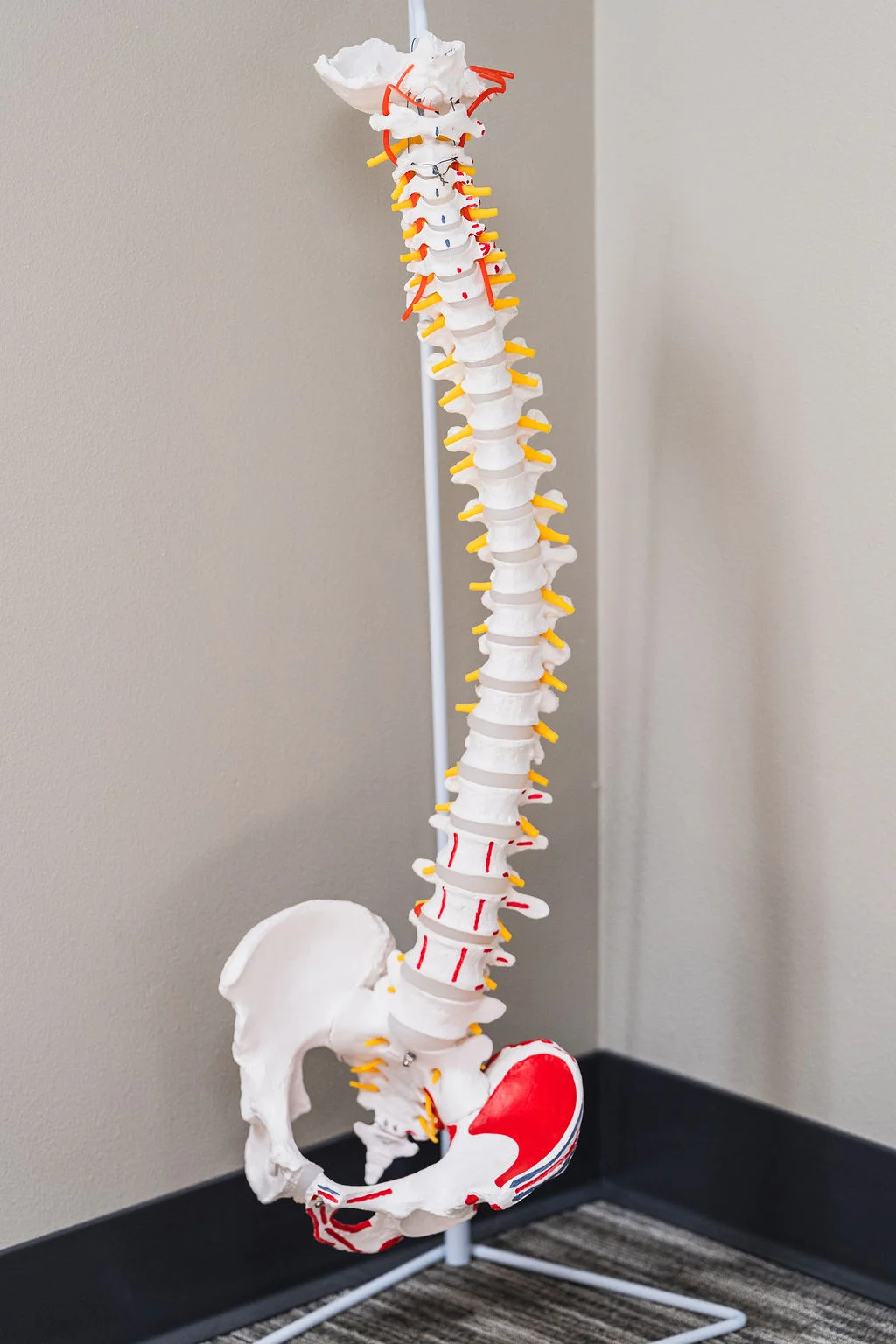
Here’s what typically happens. When a spinal segment is genuinely stuck or misaligned, it doesn’t move well. So when you twist to crack your back, the stuck segment stays stuck, and the joints above and below it, which are already moving more than they should to compensate, move even more and produce the pop. You’re not freeing the restricted segment. You’re repeatedly cracking the hypermobile ones around it.
That’s why the relief never lasts. The actual problem, the restricted segment, never gets addressed, so the tension builds right back up and you feel the urge to crack again within hours.
The Real Risk of Habitual Self-Cracking
An occasional crack isn’t going to hurt you. But making a habit of it, especially with your neck, is where problems can develop.
Every time you forcefully crack the already-mobile joints around a stuck segment, you stretch the ligaments that stabilize those joints a little further. Over time, repeated self-manipulation can contribute to joint instability, where those segments become loose and move too much. Ironically, this often makes the original tension worse, because an unstable spine has to work harder to stay supported, which creates more muscle guarding and more of the stuck feeling you were trying to relieve.
The neck deserves particular caution. The cervical spine houses critical structures, including the vertebral arteries that supply blood to the brain. Aggressive, repeated, high-force neck twisting is not something to do casually. The risk from a single gentle crack is very low, but forceful habitual neck cranking is a different matter, and it’s worth being careful.
The Difference Between Self-Cracking and a Real Adjustment
This is the heart of it. When people find out what a chiropractic adjustment actually involves, they understand why self-cracking doesn’t accomplish the same thing.
Self-manipulation is a general, unfocused movement. You twist your whole spine and whatever pops, pops, usually the segments that were already moving too much. There’s no targeting, no analysis, and no way to direct force to the specific segment that actually needs it.
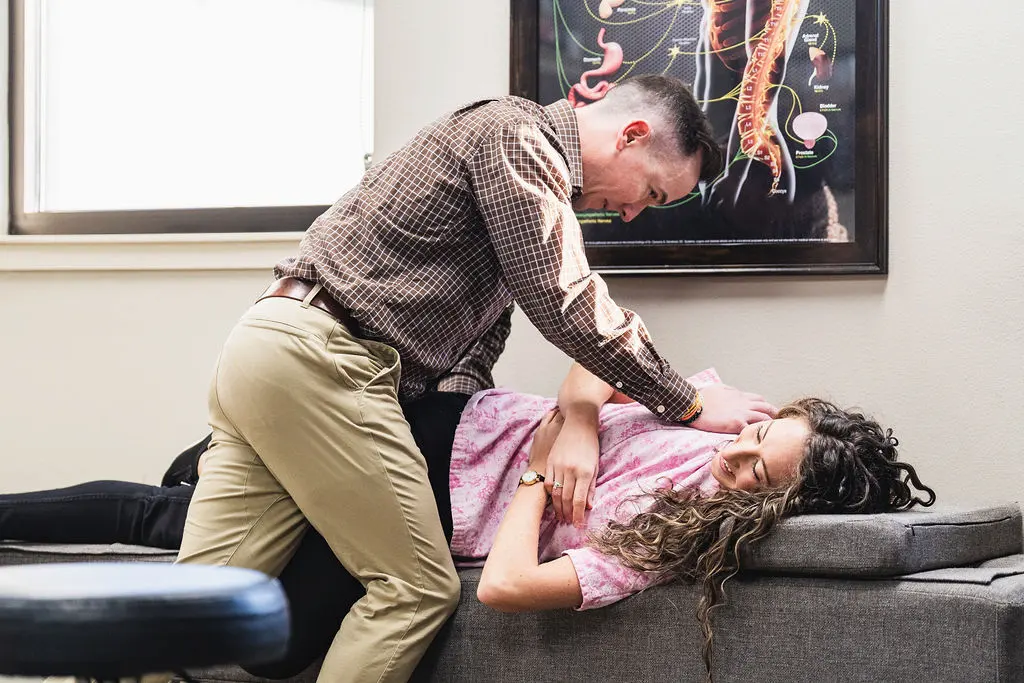
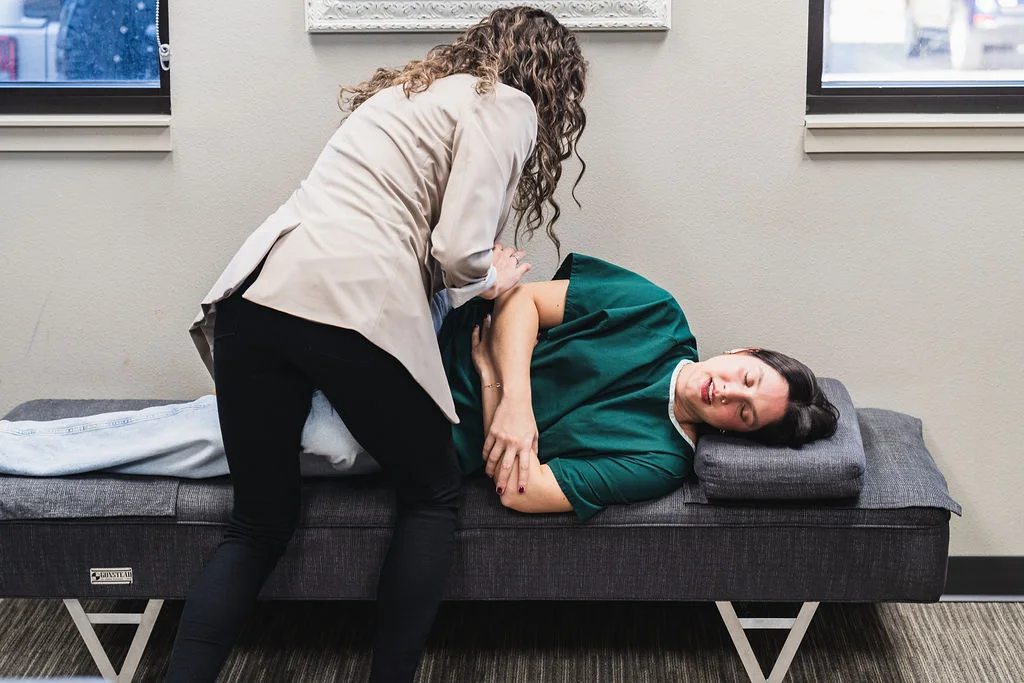
A Gonstead adjustment is the opposite. Before adjusting anything, we identify the exact segment that’s restricted using the full Gonstead analysis, which includes the Nervoscope, palpation, and full-spine X-rays. Then the adjustment delivers a specific, controlled force to that one segment, the stuck one, not the mobile joints around it.
That’s the key distinction. We move the segment that won’t move on its own, which is precisely the one you can never reach by twisting in your chair. That’s why a targeted adjustment produces lasting relief while self-cracking just resets the clock for a few hours.
If You Constantly Feel the Need to Crack, That’s Information
Here’s the part most people don’t think about. If you find yourself needing to crack your neck or back several times a day to get relief, that constant urge is telling you something.
It usually means there’s a restricted segment that isn’t moving properly, and your body keeps building tension around it as it tries to compensate. The persistent need to self-manipulate is a signal that something underneath isn’t right, and that it would benefit from a proper evaluation rather than another twist.
I see this pattern often with patients in Cedar Falls and Waterloo. People come in saying they’ve been cracking their own neck for years and it just keeps coming back. Once we identify and address the actual restricted segment, the constant urge to self-crack often fades, because the underlying restriction that was driving it has finally been dealt with.
What to Do Instead
If you’re someone who cracks constantly for relief, a few things can help while you address the root cause. Gentle range-of-motion movement, rather than forceful twisting, keeps the joints moving without the high-force stretch that destabilizes ligaments. Staying hydrated and moving regularly throughout the day reduces the stiffness that builds during long periods of sitting.
But the real answer is to find out why you feel the need to crack in the first place. If the urge is constant, there’s almost always a restricted segment behind it, and that’s exactly what a Gonstead evaluation is designed to find.
Common Questions
Will cracking my knuckles give me arthritis?
Despite the common warning, research has not established that knuckle cracking causes arthritis. It may, however, contribute to reduced grip strength and joint swelling over time with heavy habitual cracking.
Is it bad that my back cracks on its own when I move?
Joints that cavitate occasionally during normal movement, without you forcing them, are usually nothing to worry about. It’s the forceful, repeated, intentional self-manipulation that carries more risk.
If you’ve been cracking your own back or neck for relief that never lasts, there’s likely a restricted segment driving the cycle. Call Wayson Family Chiropractic at 319-266-1119 or schedule online, and we’ll find out what’s actually going on with a thorough evaluation here in Cedar Falls. If neck tension is your main issue, that’s exactly the kind of thing a precise adjustment addresses far better than self-cracking ever could.