Children’s spines change fast – and so do the habits that affect them. At Wayson Family Chiropractic in Cedar Falls, we see school-age kids with postural concerns more often now than in previous years, and the causes are pretty consistent: heavy backpacks, hours of gaming or screen time, and growth spurts that happen faster than the supporting muscles can adapt. Most postural issues in kids are addressable, especially when caught during the school-age years before they become fixed patterns.
Why School-Age Spinal Health Gets Overlooked
Infants and teenagers get most of the attention when it comes to chiropractic and spinal development. Newborns come in after difficult births, and teens get evaluated for scoliosis. But children in the middle – ages 6 through 12 – often fall through the cracks.
This is a significant developmental window. The spine is still growing and forming movement habits during these years. Kids this age are also spending more time seated than any previous generation, carrying increasingly heavy school bags, and holding their heads forward over tablets and phones in positions that would tire an adult in 20 minutes.
The problem is that children adapt. Unlike adults who notice postural fatigue relatively quickly, kids often don’t register the early signs that something is off. They just move in whatever way feels manageable – which can mean developing compensation patterns that go unnoticed until they’ve been in place for years.
What Normal vs. Concerning Posture Looks Like
A useful baseline: when your child stands relaxed with arms at their sides, their head should sit centered over their shoulders, their shoulders should be roughly level, and their hips should be even. Looking from the side, their ear should be roughly over their shoulder, which should be roughly over their hip.
Here are specific things worth watching for:
Forward head posture – the head shifting forward rather than sitting centered over the neck. Every inch of forward head position adds roughly 10 pounds of effective load to the cervical spine. In adults, we often see this from desk work. In children, it’s driven primarily by screen use and heavy backpacks.
Rounded shoulders – shoulder blades winging out or rolling forward rather than resting flat. Often develops alongside forward head posture when children spend extended time in a hunched position over devices.
Uneven shoulder height – one shoulder consistently sitting higher than the other when standing relaxed. Can indicate muscle imbalance, a compensatory pattern, or, in some cases, an early scoliotic curve worth evaluating.
Uneven hip or waist height – when one hip looks higher or one side of the waist looks more compressed. Often more visible from behind than from the front.
Head tilt or rotation preference – consistently tilting or turning the head to one side. Can indicate a cervical misalignment or muscle imbalance that’s worth checking.
None of these signs alone necessarily mean something serious is happening. But any of them, especially combined or persisting over time, warrants a proper evaluation.
The Backpack Issue Is Real
It sounds like an old concern, but backpack loads in Cedar Falls elementary and middle schools haven’t gotten lighter. Most guidelines suggest a child’s bag should weigh no more than 10-15% of their body weight. In practice, a 70-pound child carrying a 15-pound backpack – which isn’t unusual for upper elementary grades – is carrying more than 20% of their body weight on their spine for extended periods each day.
The loading pattern matters too. A bag worn low and slung off one shoulder creates a predictable asymmetric strain. Over a school year, that repetitive asymmetric load is enough to create measurable postural changes in developing spines.
The practical fix is simple: wear both straps, wear the bag high, and if possible lighten the load by leaving non-essential books in a locker. But for kids who’ve already spent a few years with poor bag habits, the postural compensation may need more active attention to address.
Screen Time and Forward Head Positioning
The average school-age child in 2025 spends several hours per day looking at a screen – tablets, phones, gaming consoles, and schoolwork on laptops. In most of these activities, the screen is held below eye level, which means sustained forward neck flexion. That position places substantial stress on the upper cervical spine and the muscles that support it.
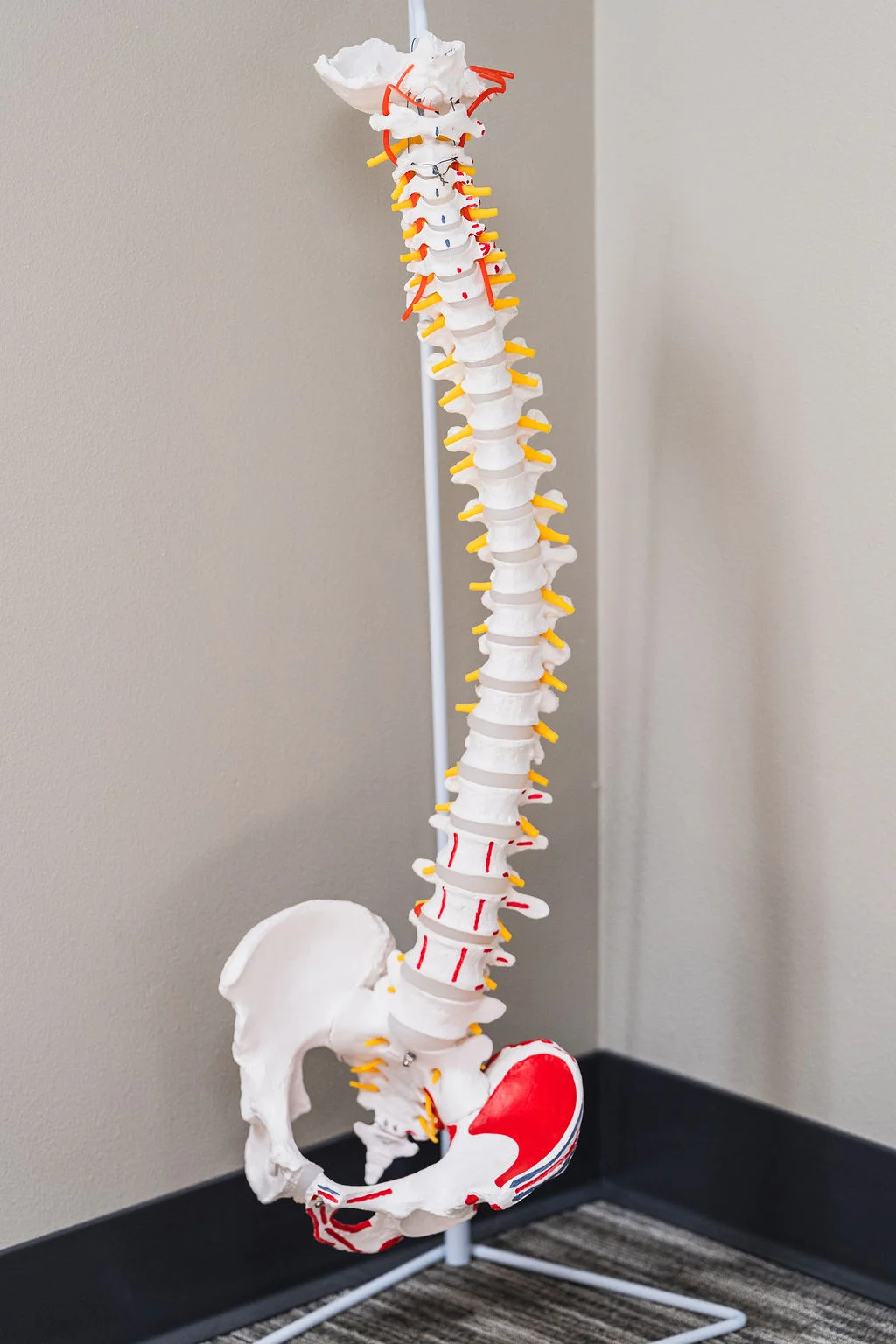
For children who are in this posture consistently from age 6 onward, the muscular and ligamentous adaptation can become significant. We often find upper cervical subluxations in kids who are otherwise asymptomatic – meaning they’re not in pain, but the structural pattern has already started to shift.
This is part of why a baseline evaluation is useful even for children who “feel fine.” What we find on examination and X-rays when necessary tells us things that symptoms alone don’t reveal until the problem is further along.
Growth Spurts and Spinal Instability
Rapid growth creates a temporary period where the musculoskeletal system is catching up to changes in bone length. Bones grow faster than muscles can adapt. This temporary lag can exaggerate postural patterns that were previously minor – a small shoulder asymmetry becomes more noticeable, a slightly forward head position becomes more pronounced.
This is normal to some extent. But it’s also a period where the spine is somewhat more vulnerable to developing persistent misalignment patterns if the structural loading is off. Children in active growth phases, especially between 8-12 for many kids, benefit from more frequent postural check-ins than children in stable growth phases.
What a Pediatric Spinal Evaluation at Wayson Family Looks Like
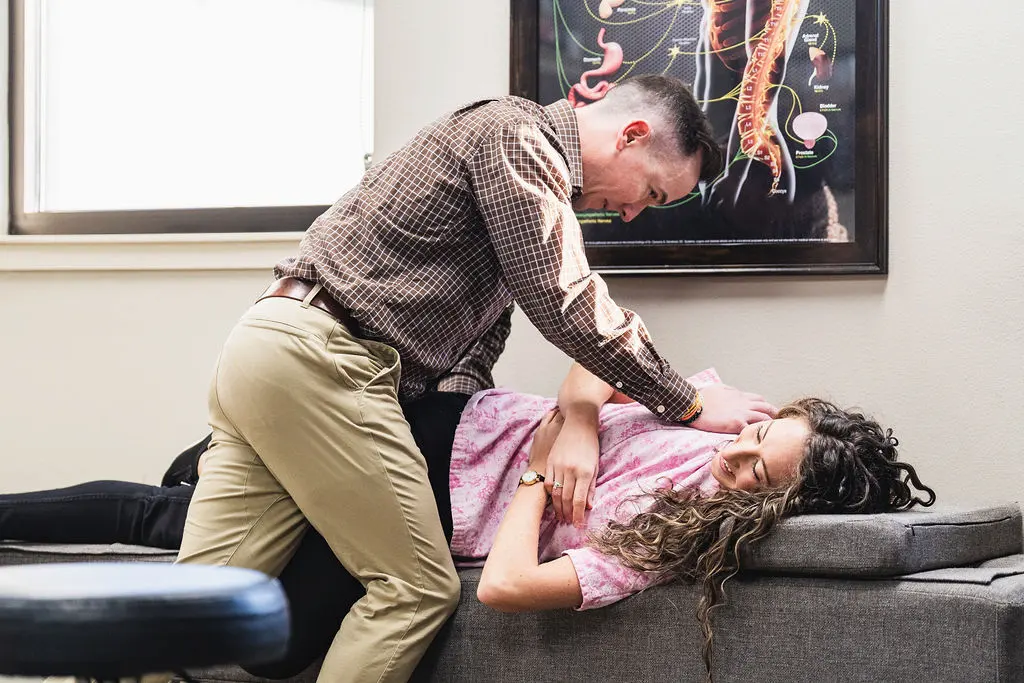
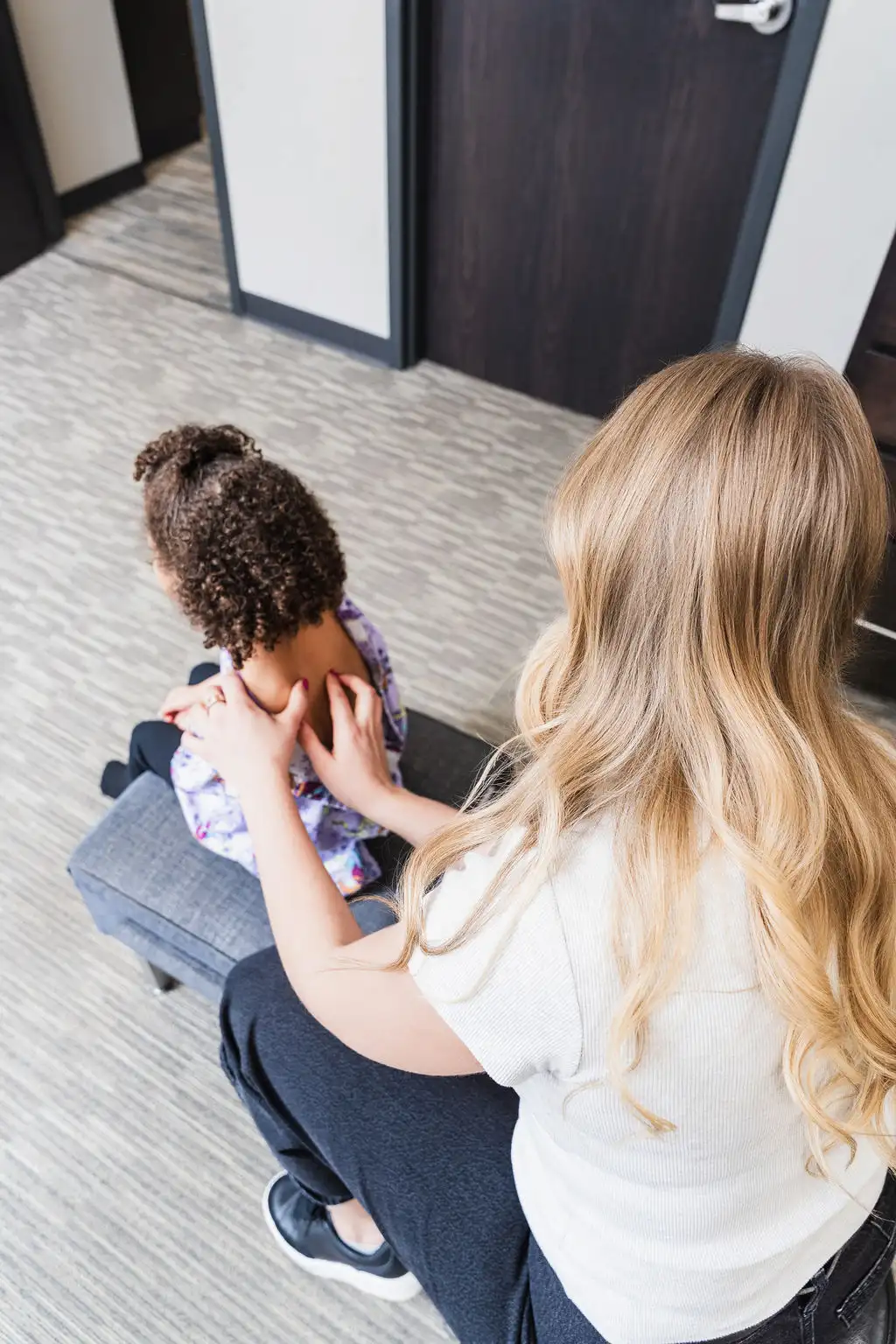
Bringing a child in for a postural evaluation is a low-key process. We take a thorough history – what they’re doing for sports, how much screen time, any complaints of back or neck discomfort, how they sleep, their backpack situation. Then we do a postural assessment, looking at alignment from multiple angles. Depending on what we find, we may use our Nervoscope instrumentation for additional assessment.
We use X-rays selectively and thoughtfully in children – only when the clinical exam indicates a specific need for imaging. Not every child evaluation requires X-rays. When we do recommend them, we explain why so parents can make an informed decision.
If we find subluxations, our pediatric adjustments are calibrated to be gentle and appropriate for a child’s developing spine. The force used for a 9-year-old is very different from what we use for an adult. Parents are welcome to stay present throughout the entire visit – and most kids find the process much less intimidating than they expected.
Our pediatric chiropractic service page has more detail on what to expect. And if you’re wondering whether your child’s posture warrants a look, the honest answer is: if you’ve noticed something and it’s been on your mind, it’s worth taking 5 minutes to have it evaluated properly.
Common Questions From Cedar Falls Parents
Is chiropractic safe for my 8-year-old?
Yes, when performed by a chiropractor trained in pediatric care. The Gonstead technique allows us to be highly specific about which segments need adjustment, and the techniques used for children are far gentler than what’s appropriate for adults. We’ve cared for patients of all ages at Wayson Family Chiropractic, including infants and young children.
My child doesn’t complain of pain. Should I still get them evaluated?
Absence of pain doesn’t mean the spine is developing optimally. Many postural problems develop gradually and painlessly during childhood before becoming symptomatic later. A baseline evaluation gives you a clear picture of where things stand and lets us track any changes over time.
How often would my child need to be seen?
It depends on what we find. If the evaluation shows good alignment and no significant concerns, periodic check-ins during growth phases – perhaps once or twice a year – may be all that’s needed. If there are subluxations or postural patterns that need attention, we’ll outline a more specific recommendation based on what the examination shows.
If you want to get your child’s spine evaluated, the team at Wayson Family Chiropractic is here to help. Call us at 319-266-1119 or book an appointment online – it’s a straightforward process, and catching postural issues early is one of the best things you can do for your child’s long-term spinal health.