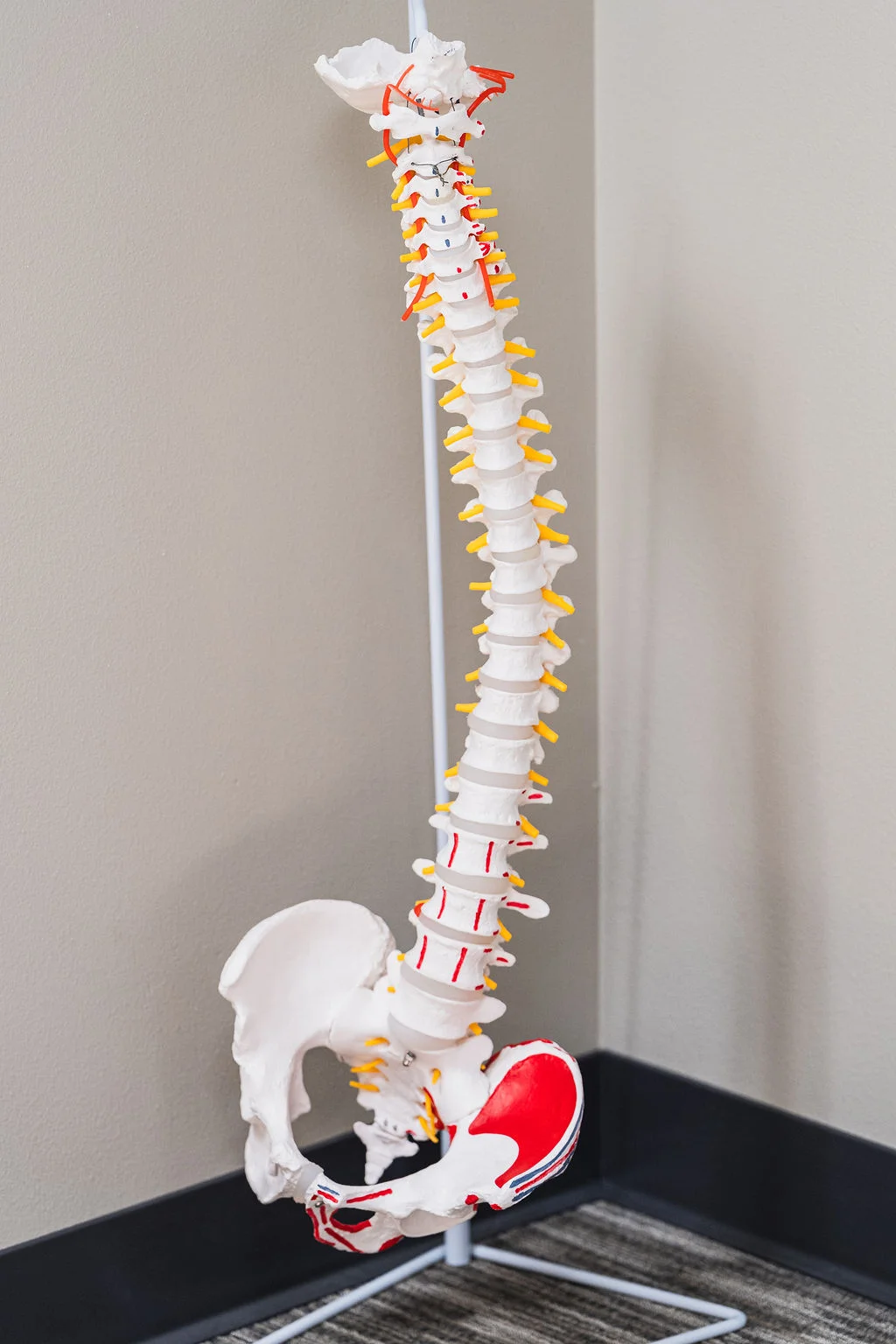

If your lower back feels stiff and locked up every morning but loosens as the day goes on, you’re experiencing one of the most common patterns we see. Morning back stiffness usually comes down to a combination of overnight inactivity, natural inflammation cycles, and reduced disc movement while you sleep. It’s rarely serious on its own, but a consistent pattern of it is worth paying attention to, because it often points to an underlying issue.
Why Your Back Stiffens Up Overnight
During the day, your spine is constantly moving. That movement pumps fluid in and out of your discs and joints, keeps the surrounding muscles active, and clears out the byproducts of normal tissue activity. Movement is what keeps everything lubricated and mobile.
At night, all of that stops. You lie relatively still for hours, and without regular movement, a few things happen. The joints of your spine aren’t being circulated with fluid the way they are during the day. Inflammatory byproducts that would normally get flushed out with movement tend to pool in and around the joints. And the muscles that support your spine settle into whatever position you’re sleeping in for long stretches.
The result is that when you first wake up and try to move, everything feels tight, stiff, and reluctant. As you get up and start moving, circulation returns, the joints get lubricated again, and the stiffness eases. That morning-to-midday loosening is the classic pattern.
The Disc Hydration Factor
Here’s something interesting that a lot of people don’t know. Your spinal discs actually change throughout the day and night, and it directly affects morning stiffness.
While you sleep lying down, your discs absorb fluid and rehydrate. This is a good and normal process, but it means your discs are at their fullest and most pressurized first thing in the morning. That extra pressure can make the discs and surrounding structures feel stiffer and more sensitive right after you wake up.
As you spend time upright during the day, gravity gradually compresses the discs and some of that fluid moves back out, which is partly why you’re measurably a little shorter at night than in the morning. This daily cycle of disc hydration is one reason morning is often the stiffest time of day for the lower back, especially if there’s already a disc or joint issue present.
When Morning Stiffness Is Just Morning Stiffness
A certain amount of morning stiffness is normal, particularly as we get older. If you feel a bit tight for the first ten or fifteen minutes after waking and it fully resolves once you’re moving, that’s usually nothing to worry about. It’s just your body catching up after a night of stillness.
Things like your mattress, your sleeping position, and your pillow setup all play into this too. An old, unsupportive mattress or a position that leaves your spine poorly supported for hours can make normal morning stiffness worse. Sometimes the fix really is as simple as addressing your sleep setup.
When It’s Telling You Something More
The morning stiffness worth paying closer attention to is the kind that’s persistent, severe, or lasts well beyond those first several minutes of movement.
If your lower back is locking up every single morning, if the stiffness takes a long time to work out, or if it’s accompanied by pain that lingers through the day, that pattern usually reflects an underlying issue rather than simple overnight inactivity. Often it’s a vertebral subluxation, a spinal segment that’s misaligned and restricted, that becomes especially noticeable in the morning because the overnight stillness and disc pressurization make an already-restricted joint feel even worse.
In these cases, the morning stiffness isn’t the problem itself. It’s the symptom that reveals the problem most clearly. The restriction is there all the time, but it announces itself loudest first thing in the morning when your spine is stiffest and least lubricated.
What Chiropractic Care Addresses Here
When persistent morning stiffness is being driven by a restricted or misaligned segment, that’s exactly what a Gonstead evaluation is designed to find. The 5-component analysis, including full-spine X-rays, lets us identify precisely which segment is restricted and what’s happening structurally around it.
Correcting that segment restores proper movement, which improves how fluid circulates through the joint and reduces the nerve interference that’s contributing to the tightness. When the underlying restriction is addressed, a lot of patients find their morning stiffness eases considerably, because the joint that was locking up overnight is now moving the way it should.
We see this pattern constantly with patients across Cedar Falls and Waterloo, especially among people whose lower back pain is worst first thing and eases with movement. It’s one of the more satisfying patterns to treat, because the improvement is often quite noticeable to the patient.
Things You Can Do at Home
Alongside proper care, a few habits genuinely help with morning stiffness.
Gentle movement before getting out of bed makes a real difference. Rather than jolting upright, spend a minute doing some easy knee-to-chest movements or gentle spinal rotations while still lying down, to get the joints moving before you load them with your body weight.
Staying hydrated supports healthy disc function. Regular movement throughout the day, rather than long stretches of sitting, keeps your spine from getting stiff and reduces how much it locks up overnight. And taking an honest look at your mattress and sleeping position is worthwhile, since you spend a third of your life there and it directly affects how your back feels in the morning.
Common Questions
Should I stretch first thing in the morning?
Gentle movement is helpful, but avoid aggressive stretching the moment you wake up, when your discs are most pressurized. Ease into it with gentle range-of-motion movement rather than deep static stretches right away.
Could morning stiffness be arthritis?
It can be one factor, particularly if you have joint degeneration. Prolonged, severe morning stiffness lasting more than an hour is also associated with certain inflammatory conditions and is worth mentioning to a healthcare provider. A proper evaluation helps sort out what’s driving it.
Why does it get better as the day goes on?
Movement restores circulation and joint lubrication, and upright time relieves some of the overnight disc pressurization. That’s why the stiffest point is usually right after waking and it eases with activity.
If your lower back locks up every morning and you’re tired of working through it, there’s usually a reason worth identifying. Call Wayson Family Chiropractic at 319-266-1119 or schedule online, and we’ll find out what’s actually behind it with a thorough evaluation here in Cedar Falls.