
Herniated disc treatment in Cedar Falls starts with conservative, non-surgical approaches that address the spinal misalignments creating abnormal disc pressure before considering invasive options. Gonstead chiropractic adjustments reduce pressure on herniated discs by correcting vertebral alignment, improving disc spacing, and taking stress off compressed nerve roots that cause radiating leg pain and numbness. Most herniated disc patients improve with specific chiropractic care, avoiding the risks, recovery time, and cost of surgery while addressing the biomechanical dysfunction that allowed the herniation to develop.
Understanding What a Herniated Disc Actually Is
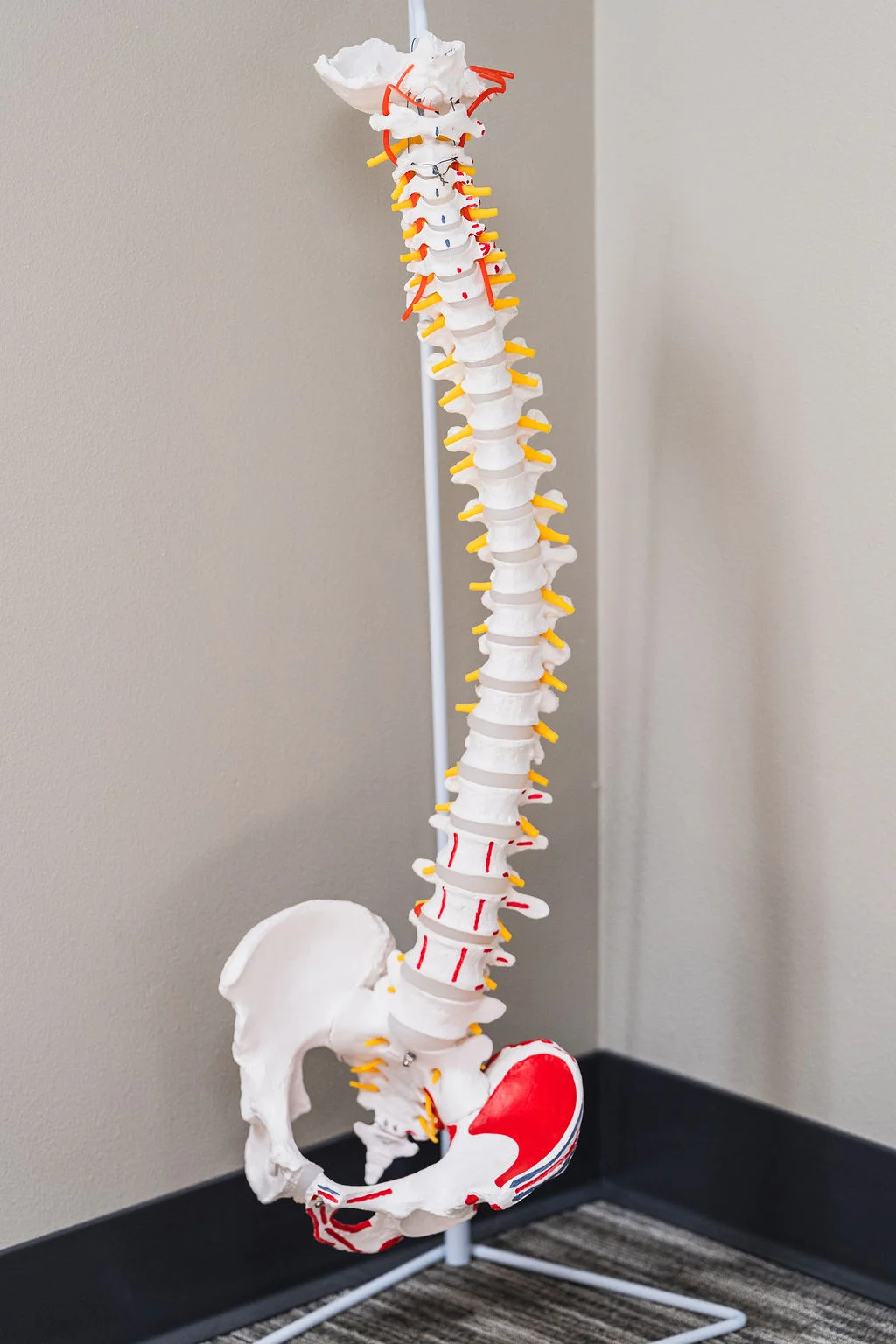
Your spinal discs sit between vertebrae, acting as shock absorbers and allowing movement. Each disc has a tough outer layer (annulus fibrosus) and a gel-like center (nucleus pulposus).
A herniated disc occurs when the outer layer tears or weakens, allowing the inner gel to push out. This is also called a ruptured disc, slipped disc, or bulging disc, though these terms have slightly different technical meanings.
The herniated material often presses on nearby nerve roots. This creates the severe pain, numbness, and weakness that makes disc herniation so debilitating.
Most herniations occur in the lumbar spine (lower back), particularly at L4-L5 and L5-S1. Cervical herniations (neck) are less common but equally problematic.
How Disc Herniations Develop
Disc herniations rarely happen from a single event. They develop over time through a predictable pattern.
Phase 1 is disc degeneration. Years of abnormal pressure from spinal misalignment weaken the disc’s outer layer. Small tears develop. The disc gradually loses height.
Phase 2 is disc protrusion. The weakened outer layer bulges outward but hasn’t torn completely. You might have occasional back pain or stiffness.
Phase 3 is extrusion. The outer layer tears and inner gel material pushes out. This is the actual herniation. Symptoms become severe as the herniated material contacts nerve roots.
Phase 4 is sequestration. In some cases, the herniated material breaks off completely. This is the most severe stage.
Understanding this progression is critical. The herniation itself is the result of long-term spinal dysfunction. Simply removing the herniated disc through surgery doesn’t address the mechanical problem that caused it.
Common Symptoms of Herniated Discs
Herniated disc symptoms depend on location and severity, but certain patterns are consistent.
Lumbar Disc Herniation Symptoms
Lower back pain is usually present but often not the worst symptom. Sciatica, radiating pain down one leg, is the hallmark sign.
Numbness or tingling follows the nerve path into your leg and foot. Specific toe numbness can indicate which disc is herniated.
Weakness in your leg or foot makes walking difficult. Your foot might drag or feel unstable.
Pain often worsens with sitting, bending forward, coughing, or sneezing. These activities increase disc pressure.
Cervical Disc Herniation Symptoms
Neck pain radiates into your shoulder, arm, and hand. The pain path depends on which cervical nerve is compressed.
Arm weakness affects specific muscles depending on the nerve involved. Grip strength often decreases.
Numbness or tingling in specific fingers indicates the level of herniation.
Why Conservative Care Should Come First
Surgery for herniated discs has a role in specific situations. But it should be the last option, not the first.
Research shows that many herniated disc patients improve with conservative care. Studies comparing surgery to non-surgical treatment find similar long-term outcomes in most cases.
Surgery carries significant risks: infection, nerve damage, failed back surgery syndrome, adjacent segment disease, and the general risks of anesthesia.
Recovery from disc surgery takes months. Return to normal activity is slow and sometimes incomplete.
Perhaps most importantly, surgery doesn’t address the spinal dysfunction that allowed the herniation to develop. Without correcting the underlying biomechanics, problems often return.
How Gonstead Chiropractic Addresses Herniated Discs
Chiropractic care for herniated discs focuses on reducing pressure on the affected disc and surrounding nerves.
At Wayson Family Chiropractic in Cedar Falls, we start with comprehensive analysis. X-rays show disc spacing, vertebral alignment, and the structural problems contributing to the herniation.
We identify which vertebrae are misaligned and creating abnormal disc stress. Often, the herniation occurs at a segment that’s been dysfunctional for years.
Adjustments restore proper alignment to the involved segments. This reduces compression on the disc and allows better positioning.
We also address adjacent segments that are compensating for the problem area. Your spine works as a unit. Correcting only the herniated level while ignoring compensation patterns doesn’t produce optimal results.
Specific Positioning for Disc Relief
Certain positions reduce pressure on herniated discs while allowing healing.
For lumbar herniations, we often use adjustments that create extension (backward bending) of the spine. This position moves the disc material away from the nerve root.
Adjustments are modified based on your tolerance and symptom severity. We’re not using the same force we would for routine maintenance care.
Between adjustments, positioning matters. Avoiding prolonged sitting, using proper pillow support, and specific stretches all support the healing process.
The Decompression Effect of Proper Alignment
When vertebrae are properly aligned, disc pressure distributes evenly. This creates a decompression effect even without special tables or equipment.
Misaligned vertebrae wedge the disc, forcing the nucleus to one side. This increases pressure on the weakened area where herniation occurred.
Correcting the misalignment allows the disc to return toward its normal position. Pressure reduces. Nerve compression decreases.
This isn’t instant. The disc needs time to respond. But many patients notice significant improvement within weeks of starting care.
What to Expect During Treatment
Herniated disc treatment typically follows a progressive pattern.
Initial care focuses on pain reduction and improving mobility. Adjustments are gentle and specifically targeted. We’re not trying to fix everything immediately.
As pain reduces and function improves, care shifts toward correcting the underlying spinal dysfunction. This prevents recurrence.
Treatment frequency is higher initially. You might need adjustments 2-3 times per week for the first few weeks. As you improve, visit frequency reduces.
Total treatment time varies. Mild herniations might resolve in a few weeks. Severe cases can take several months of consistent care.
Realistic Expectations
Being honest about what’s achievable is important. Not every herniated disc responds completely to conservative care.
Most patients experience significant improvement. Pain reduces, function returns, and surgery becomes unnecessary.
Some patients improve but retain minor symptoms. They’re functional and pain-free enough to avoid surgery, even if they’re not 100% perfect.
A small percentage don’t improve sufficiently with conservative care. These patients need surgical referral. This typically includes cases with progressive weakness, severe nerve damage, or cauda equina syndrome.
Warning Signs That Require Immediate Medical Attention
Certain symptoms indicate serious problems requiring emergency medical care, not chiropractic adjustment.
Cauda equina syndrome involves loss of bladder or bowel control, saddle anesthesia (numbness in the area that would touch a saddle), and progressive leg weakness. This is a surgical emergency.
Rapidly progressing weakness in your legs indicates severe nerve compression. This needs immediate evaluation.
Severe pain that doesn’t respond to any position or treatment within a few days might indicate complications requiring different intervention.
We screen for these warning signs during evaluation. If present, we refer immediately to appropriate medical care.
Why Some Disc Herniations Heal and Others Don’t
Disc herniation healing depends on several factors.
The size and location of the herniation matter. Smaller herniations are more likely to reabsorb. Large extrusions or sequestered fragments are less likely to completely resolve.
Your body’s inflammatory response plays a role. Some people’s bodies reabsorb herniated disc material through natural immune processes. Others don’t.
Age affects healing. Younger patients generally have better tissue healing capacity than older patients with significant degeneration.
But the most important factor is whether the spinal dysfunction causing abnormal disc stress gets corrected. Without addressing the biomechanics, even surgically repaired discs often fail.
Activities to Avoid During Recovery
Certain activities increase disc pressure and slow healing. Avoiding these during recovery is critical.
Prolonged sitting compresses discs significantly. Limit sitting time and use proper support. Stand and move regularly.
Forward bending, especially with twisting, is the worst position for lumbar discs. Avoid picking things up from the floor. Bend at your knees, not your waist.
Heavy lifting obviously stresses healing discs. Even lifting moderate weights can be problematic if your form isn’t perfect.
High-impact activities like running or jumping create compression forces. Save these until you’re further along in recovery.
Exercises That Support Disc Healing
While some activities should be avoided, specific exercises support disc recovery.
McKenzie Extensions
Lying on your stomach and pressing up with your arms extends your spine. This position often relieves disc-related leg pain by moving the herniation away from nerves.
Walking
Gentle walking maintains mobility without excessive impact. Start with short distances and gradually increase.
Core Stabilization
Once acute pain reduces, gentle core exercises stabilize your spine and protect healing discs. Planks and bird dogs work well.
Nerve Flossing
Gentle nerve mobilization exercises help reduce adhesions and improve nerve mobility. These should be taught by a professional.
The Role of Inflammation in Disc Pain
Much of the pain from herniated discs comes from inflammation, not just mechanical compression.
The herniated disc material is chemically irritating to nerves. Your body’s inflammatory response to this foreign material creates significant pain.
As inflammation reduces, pain often improves even if the herniation itself hasn’t completely resolved. This is why some patients feel dramatically better within weeks even though MRI still shows the herniation.
Proper spinal alignment reduces ongoing irritation that drives chronic inflammation. This allows your body’s natural anti-inflammatory processes to work.
When Surgery Becomes Necessary
Conservative care should be tried first, but surgery has appropriate indications.
Progressive neurological deficits that worsen despite conservative treatment may need surgical decompression.
Cauda equina syndrome requires emergency surgery.
Severe pain that doesn’t improve after 8-12 weeks of appropriate conservative care might warrant surgical consultation.
If surgery becomes necessary, proper post-surgical chiropractic care helps prevent adjacent segment problems and maintains overall spinal health.
Preventing Future Disc Problems
Once you recover from a herniated disc, prevention becomes the focus.
Maintaining proper spinal alignment through periodic chiropractic care reduces stress on all discs.
Core strengthening provides active support for your spine.
Proper body mechanics during lifting, bending, and daily activities protect healing discs.
Maintaining healthy weight reduces compression forces on lumbar discs.
Why Cedar Falls Patients Choose Our Approach
Herniated disc patients throughout Cedar Falls and Waterloo choose our practice because we provide thorough evaluation before recommending treatment.
You’ll see your X-rays and understand exactly what’s happening with your spine and discs. We explain which segments are involved and what needs correction.
Our Gonstead approach provides specific corrections targeted to your problem, not general manipulation that might worsen disc issues.
We’re honest about prognosis. If we believe you need surgical referral, we tell you. We don’t keep treating cases that aren’t improving appropriately.
Try Conservative Care First
If you’ve been told you have a herniated disc and surgery is your only option, that’s often not accurate.
Conservative chiropractic care helps most herniated disc patients avoid surgery while achieving the function and pain relief they need.
The approach is safe, non-invasive, and addresses the spinal dysfunction that contributed to the herniation. Even if symptoms don’t resolve completely, you’re likely better off trying this first.
Schedule a consultation at Wayson Family Chiropractic or call 319-266-1119 to get evaluated for your herniated disc. Let’s determine whether conservative care can help you avoid surgery.