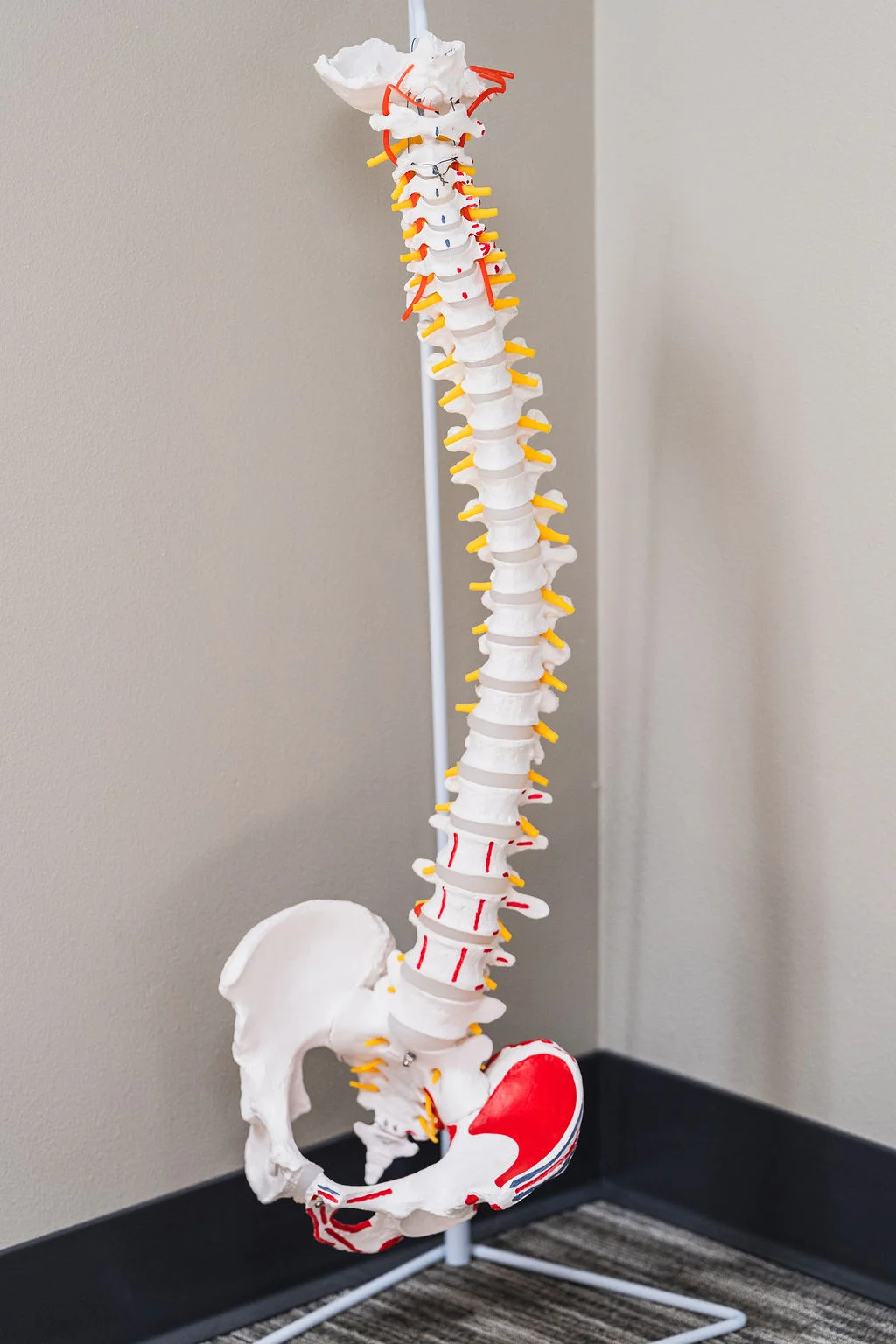

Forward head posture from desk work is creating an epidemic of neck pain and upper back pain among Cedar Falls office workers. For every inch your head moves forward from proper alignment, your neck muscles support an additional 10 pounds of weight, creating chronic strain that leads to headaches, shoulder tension, and spinal misalignment. Gonstead chiropractic corrects the cervical and thoracic misalignments caused by poor desk posture while helping you establish ergonomic habits that prevent problems from returning.
What Forward Head Posture Actually Is
Proper head position means your ears align directly over your shoulders when viewed from the side. This balanced position minimizes stress on your neck muscles and spine.
Forward head posture means your head sits in front of your shoulders. If you work at a computer, your head probably extends 2-3 inches forward from where it should be.
This seems like a small shift. But biomechanically, it’s massive.
Your head weighs 10-12 pounds in neutral position. When it moves one inch forward, effective weight increases to about 20 pounds. At two inches forward, your neck supports roughly 30 pounds. At three inches, you’re approaching 40 pounds.
Your neck muscles weren’t designed to hold that much weight all day. The chronic overload creates muscle fatigue, trigger points, and eventually forces cervical vertebrae out of alignment.
How Desk Work Creates the Problem
Most office workers in Cedar Falls and Waterloo spend 8-10 hours daily at computers. Very few have properly set up workstations.
Monitor placement is usually wrong. Screens sit too low, forcing you to look downward. This flexes your neck and pushes your head forward.
Keyboard position matters too. When keyboards are too far away, you lean forward to reach them. This shifts your entire upper body forward and takes your head with it.
Chair height and back support affect posture as well. Poorly adjusted chairs don’t support your lumbar spine, causing you to slump. That slumping shifts your center of gravity forward.
Add in looking down at phones during breaks, and your neck barely experiences proper alignment during the entire workday.
The Domino Effect on Your Spine
Forward head posture doesn’t just affect your neck. It creates a cascade of problems throughout your spine.
When your head moves forward, your upper back rounds to compensate. This thoracic kyphosis (excessive forward curve) becomes permanent over time.
The rounded upper back forces your shoulders to roll forward. This creates chronic tension in your chest muscles and weakens your upper back muscles.
Your lower back must compensate for the imbalanced upper body. Many people with forward head posture develop excessive lumbar lordosis (lower back arch) as the body tries to maintain overall balance.
The result is a full-spine postural distortion pattern that started with looking at a screen wrong.
Symptoms Desk Workers Experience
Forward head posture creates a consistent pattern of symptoms among office workers.
Neck Pain and Stiffness
This is usually the first symptom. Your neck feels tight and achy by midday. Range of motion reduces, making it difficult to check blind spots while driving.
Upper Back Pain
Pain between the shoulder blades develops from the thoracic spine rounding forward. This area feels tight and sometimes burns or aches.
Shoulder Tension
Your shoulders feel perpetually tense and elevated. Massage provides temporary relief, but tension returns within days.
Headaches
Tension headaches starting at the base of the skull and spreading forward are common. These often worsen as the workday progresses.
Reduced Range of Motion
Turning your head fully to the side becomes difficult. Looking up creates discomfort. Your neck feels locked in forward position.
Numbness or Tingling in Arms
In severe cases, nerve compression from cervical misalignment creates numbness, tingling, or weakness in your arms or hands.
How Gonstead Chiropractic Corrects Posture Problems
Correcting forward head posture requires addressing both the postural habits and the spinal misalignments they’ve created.
At Wayson Family Chiropractic, we start with comprehensive analysis. Your case history reveals how long you’ve worked at a desk and what ergonomic issues exist.
Postural evaluation shows the degree of forward head position and thoracic rounding. We measure these objectively to track improvement.
Cervical X-rays reveal the underlying structural changes. Chronic forward head posture reduces the natural cervical curve and creates specific misalignment patterns.
Adjustments target the misaligned cervical and thoracic vertebrae. We restore proper alignment so your spine can support your head in neutral position without constant muscle strain.
But adjustments alone aren’t enough. If you return to the same desk setup and habits, the problem returns. That’s why ergonomic education is part of treatment.
Ergonomic Solutions That Actually Work
Most ergonomic advice is generic and impractical. Here are specific changes that make real differences for desk workers.
Monitor Position
Your monitor’s top edge should sit at or slightly below eye level. This keeps your head in neutral position rather than tilted down.
The screen should be arm’s length away. Too close forces your eyes to work harder. Too far makes you lean forward.
Keyboard and Mouse Placement
Keep your keyboard close enough that your elbows bend at 90 degrees when typing. You shouldn’t need to reach forward.
Your mouse should sit at the same height as your keyboard, close to your body. Reaching for a distant mouse pulls your shoulder and head forward.
Chair Setup
Adjust seat height so your feet rest flat on the floor and thighs are parallel to the ground. This supports proper pelvic position.
Use the lumbar support. Your lower back should touch the chair back, maintaining its natural curve. This prevents slumping.
Phone Usage
Hold your phone at eye level instead of looking down at it. This simple change eliminates hours of neck flexion daily.
Better yet, use hands-free options for calls. Cradling a phone between ear and shoulder creates severe neck strain.
The 20-20-20 Rule for Desk Workers
Even perfect ergonomics can’t overcome sitting still for hours. Movement is essential.
Follow the 20-20-20 rule: every 20 minutes, look at something 20 feet away for 20 seconds. This breaks the sustained forward gaze and relaxes neck muscles.
Better yet, stand up and move every 30 minutes. Walk to get water. Do a few shoulder rolls. Look around the room. These brief movement breaks prevent muscles from locking into forward position.

Exercises That Support Posture Correction
Specific exercises strengthen the muscles that hold proper posture and stretch the tight muscles pulling you forward.
Chin Tucks
Pull your chin straight back, creating a “double chin.” Hold for 5 seconds. This strengthens deep neck flexors that support neutral head position.
Shoulder Blade Squeezes
Pull your shoulder blades together and down. Hold for 5 seconds. This strengthens upper back muscles and counteracts rounded shoulders.
Chest Stretches
Stand in a doorway with arms on the frame. Lean forward gently to stretch chest muscles. Hold 30 seconds. This releases the tight muscles pulling your shoulders forward.
Upper Back Extension
Sit tall and gently arch your upper back backward. This counters the constant forward flexion from desk work.
These exercises aren’t cure-alls. They support chiropractic correction but don’t replace it. The spinal misalignments still need adjustment.
Why Massage Alone Doesn’t Fix the Problem
Many desk workers get regular massage for shoulder and neck tension. Massage feels good and provides temporary relief.
But muscle tension is a symptom, not the cause. The muscles are tight because they’re working overtime to support your forward head position and protect misaligned vertebrae.
Massage relaxes the muscles without correcting the underlying spinal problem. Within days, the tension returns because the cause remains.
The effective approach combines chiropractic correction of spinal misalignment with ergonomic changes that prevent re-injury. Massage can supplement this but shouldn’t be the primary treatment.
How Long Correction Takes
Forward head posture didn’t develop overnight. You’ve likely had poor desk posture for years before symptoms became severe enough to seek help.
The spinal misalignments, muscle imbalances, and postural habits are all well-established. Correction takes time.
Most Waterloo and Cedar Falls patients notice symptom improvement within a few weeks of starting care. But structural correction of chronic postural problems typically requires several months of adjustments combined with consistent ergonomic habits.
The good news is improvement is progressive. You feel better throughout the process, not just at the end.
Preventing Forward Head Posture in Remote Workers
Remote work has increased forward head posture problems. Home office setups are often worse than workplace ergonomics.
Laptop work is particularly problematic. Screens sit too low, keyboards are cramped, and many people work from couches or beds.
If you work from home, invest in proper equipment. Get an external monitor, keyboard, and mouse. Set up a dedicated workspace with good lighting and proper chair support.
Don’t let the convenience of working anywhere compromise your spinal health. Your neck will pay the price.
Tech Neck in Young Adults
Forward head posture isn’t limited to office workers. Young adults develop “tech neck” from constant phone and device use.
Teenagers and college students spend hours daily looking down at screens. Many develop cervical problems in their 20s that previous generations didn’t see until their 40s or 50s.
The same principles apply: proper device position, regular movement breaks, and chiropractic care when misalignments develop.
The Cost of Ignoring Posture Problems
Forward head posture worsens over time if not addressed. The cervical curve continues reducing. Disc degeneration accelerates. Arthritis develops at affected joints.
Many people in their 50s and 60s with severe neck problems trace the origins back to decades of poor desk posture.
Early intervention prevents this progression. Correcting posture problems in your 30s or 40s saves you from chronic pain and limited function later.
Real Solutions for Cedar Falls Office Workers
If you’re an office worker in Cedar Falls or Waterloo dealing with neck pain, headaches, or shoulder tension from desk work, the solution isn’t just better posture awareness.
You need correction of the spinal misalignments that poor posture has created. You need proper ergonomic setup. And you need strategies to maintain improvements long-term.
That’s comprehensive care, not just symptom management.
Schedule a consultation at Wayson Family Chiropractic or call 319-266-1119 to address your forward head posture before it becomes a permanent problem.