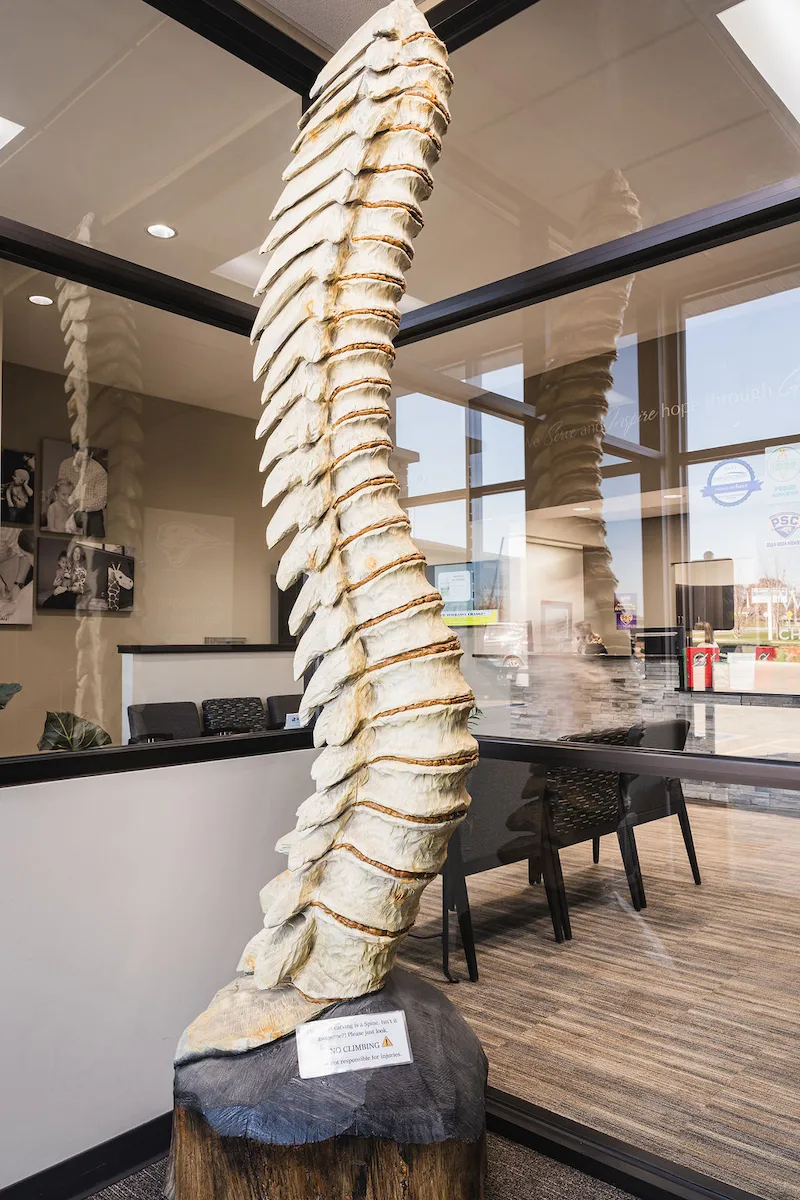

Sciatica treatment in Cedar Falls works best when it identifies the exact source of nerve irritation rather than just masking symptoms. Gonstead chiropractic uses a comprehensive 5-component analysis to pinpoint the specific vertebral misalignment compressing your sciatic nerve. This precision approach means adjustments target only the problem areas, giving you lasting relief instead of temporary fixes.
What Sciatica Actually Is (And Why Location Matters)
Sciatica isn’t a condition itself. It’s a symptom of nerve compression, usually in your lower back.
The sciatic nerve is the longest nerve in your body, running from your lower spine through your hips and down each leg. When something pinches or irritates this nerve, you feel it anywhere along that path.
Most people experience sharp, shooting pain down one leg. Others get numbness, tingling, or weakness that makes walking difficult.
Here’s what causes the compression: a herniated disc, bone spur, or spinal misalignment (what we call a subluxation) puts pressure on the nerve root. The pain you feel in your leg is actually coming from your spine.
Why General Chiropractic Adjustments Miss the Mark
Not all chiropractic care is the same. Many chiropractors use general adjustment techniques that treat multiple areas of your spine in every visit.
The problem? If your sciatica stems from one specific misaligned vertebra, adjusting other areas won’t help. In fact, it can make things worse by creating unnecessary movement in stable areas.
At Wayson Family Chiropractic, we use the Gonstead technique specifically because it identifies and corrects only the vertebrae causing your symptoms. No random “cracking,” no general manipulation.
The Gonstead 5-Component Analysis for Sciatica
Before any adjustment, we need to know exactly where the problem is. That’s where Gonstead’s systematic approach makes the difference.
1. Case History
We start by understanding when your sciatica began, what makes it worse, and what provides relief. Did it start after lifting something heavy? Does sitting make it worse? These details point us toward the source.
2. Visualization
We observe how you move, stand, and walk. Postural compensation patterns reveal which areas of your spine are under stress.
3. Instrumentation
We use a Nervoscope, a specialized tool that detects temperature differences along your spine. Nerve interference creates measurable heat patterns that show us exactly where the problem is.
4. Palpation
We feel for restricted movement, muscle tension, and specific points of tenderness. Static and motion palpation tells us which vertebrae aren’t moving correctly.
5. X-Ray Analysis
Full-spine X-rays show the underlying structural problems you can’t see or feel. We identify disc spacing issues, bone alignment, and the exact angle of misalignment causing nerve compression.
This five-part system ensures we’re not guessing. We know which vertebra to adjust, in what direction, and with how much force before we ever touch your spine.

What Gonstead Adjustments for Sciatica Look Like
Once we’ve identified the problem vertebra through our analysis, the adjustment itself is specific and controlled.
For lower back sciatica, we often use a specialized table that allows precise positioning. You’ll lie on your side while we deliver a quick, targeted thrust to the misaligned vertebra.
The goal is to restore proper alignment and take pressure off the nerve root. Many patients feel immediate relief as the nerve compression reduces.
But here’s the thing: one adjustment rarely fixes sciatica completely. The disc, muscles, and ligaments need time to stabilize in their corrected position. That’s why we create a treatment plan based on your specific case.
How Long Does Sciatica Treatment Take?
Everyone responds differently. Some Cedar Falls patients notice significant improvement after just a few visits. Others with chronic sciatica or severe disc involvement need several weeks of care.
The factors that affect your timeline include how long you’ve had symptoms, the severity of the misalignment, and whether you have disc damage. Acute sciatica (recently started) typically responds faster than chronic cases you’ve dealt with for months or years.
During your first visit, we’ll give you a realistic timeline based on what we find in your examination and X-rays. We don’t make promises we can’t keep.
Why Sciatica Comes Back (And How to Prevent It)
Here’s the frustrating truth: sciatica can return if the underlying cause isn’t fully corrected.
Let’s say your disc herniation came from poor lifting mechanics at work. If we fix the alignment but you return to the same movement patterns, you’re likely to re-injure yourself.
That’s why we focus on both correction and prevention. We’ll teach you proper body mechanics, strengthening exercises, and postural habits that protect your spine long-term.
Some patients also benefit from periodic maintenance adjustments once their sciatica resolves. Think of it like dental cleanings: prevention is easier than waiting for another crisis.
What Makes Waterloo and Cedar Falls Patients Choose Gonstead
Patients throughout the Cedar Valley choose our practice because we don’t take a one-size-fits-all approach.
Your lower back pain and sciatica aren’t the same as the next person’s. The Gonstead technique respects that by analyzing your specific case thoroughly before creating a treatment plan.
We also explain what we’re doing and why. You’ll understand which vertebra is causing your symptoms, what the X-rays show, and how each adjustment helps. Informed patients heal better.
When to Seek Sciatica Treatment
Don’t wait until you can barely walk to get help. Early intervention means faster recovery.
You should see a chiropractor if you experience shooting leg pain that doesn’t improve with rest, numbness or tingling that spreads, weakness in your leg or foot, or pain that interferes with daily activities.
That said, certain symptoms require immediate medical attention: loss of bladder or bowel control, progressive leg weakness, or severe pain following trauma. These can indicate serious nerve damage that needs emergency care.
Real Relief Starts with Accurate Diagnosis
The biggest mistake people make with sciatica is treating the leg pain instead of the spinal cause. Pain medication, stretching, and exercises might provide temporary relief, but they don’t correct the misalignment compressing your nerve.
Gonstead chiropractic addresses the root problem. Once the vertebra is properly aligned and the disc pressure reduces, your body can heal naturally.
That’s the difference between masking symptoms and actually fixing the problem.
If you’re dealing with sciatica in Cedar Falls or Waterloo, you don’t have to accept the pain as permanent. Schedule a consultation at Wayson Family Chiropractic or call 319-266-1119 to start your path toward lasting relief.